 Inverters & Batteries ship FREE
 Ask about rewards for referring friends and family
 U.S. Based Support
 Want to Add a battery?
solar inverters
Solar Carport Racking Systems: 2026 Buyer’s Guide
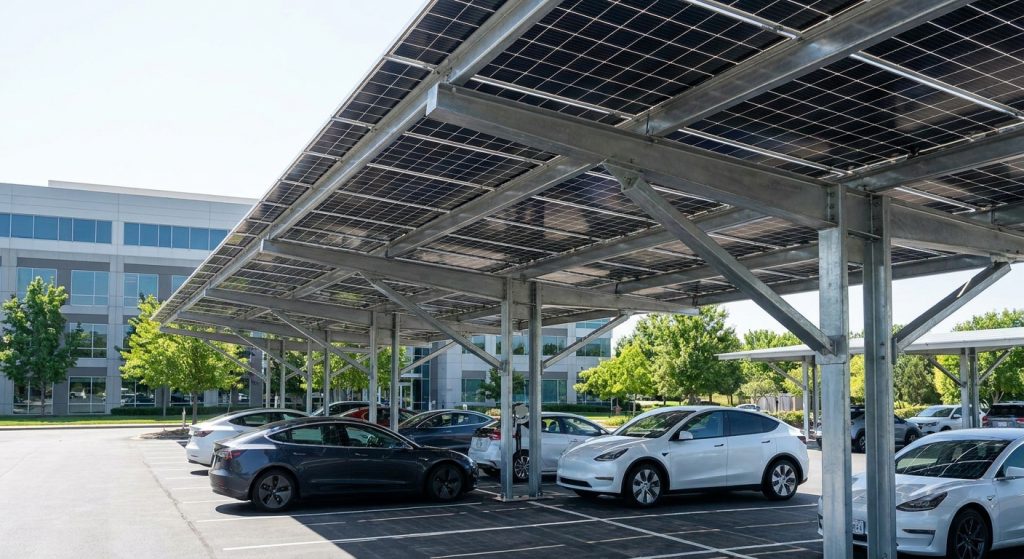
Carports built for solar have to do two jobs at once: hold up a roof deck and carry a live power plant through 30-year wind and snow cycles. Get the racking wrong and you're re-torquing bolts in year three instead of collecting production data. This guide breaks down what installers and residential buyers actually need to check before ordering steel or aluminum for a solar carport.
TL;DR
Solar carport racking systems in 2026 span bolt-together aluminum rail kits for single-bay residential jobs up to engineered steel canopy frames rated for 180+ mph wind zones on commercial spans. For a single-bay residential carport, Unirac's SolarMount carport kit is the practical Buy; for multi-bay commercial spans, IronRidge's XR1000 rail system is the Buy because it carries the engineering documentation most jurisdictions require for permitting. Skip any rail rated only for rooftop wind loads — a carport post takes lateral wind loading a roof never sees, and that difference shows up in the stamped calc packet, not the spec sheet headline.
Why This Matters
A rooftop array sheds wind load into the existing structure of the house. A carport is the structure — the racking, the posts, and the footings are the entire load path from panel to ground. That's why carport racking gets engineered separately from roof-mount racking, even when the panel and rail hardware look similar on a spec sheet.
Get the post spacing or footing depth wrong and the fix isn't a re-torque, it's a re-pour. Sun Supply PV's mounting and racking catalog carries the manufacturer lines installers actually spec for carport jobs in 2026, and the difference between a Buy and a Skip usually comes down to three things: engineering documentation, corrosion grade, and whether the post spacing matches your span, not your assumption.
Who This Is For
This guide is built for two buyers: the licensed installer bidding a commercial or multifamily carport array who needs a stamped engineering packet for the AHJ, and the residential buyer adding a carport over a driveway who wants a single-bay kit that won't need an engineer on retainer. Both need to know the same four things before ordering — wind rating, post spacing, material grade, and grounding hardware — they just weigh them differently.
What to Look For in Solar Carport Racking Systems
Engineered Wind and Snow Load Ratings
Carport racking has to carry the full structural load a house roof normally absorbs on its own. A system rated for 90 mph rooftop wind exposure is not automatically rated for a freestanding carport in the same wind zone — the lateral load path through an open post is different math. Confirm the manufacturer publishes a stamped load table for freestanding carport use, not just rooftop attachment, before you spec posts.
Post Spacing and Bay Width
Most residential carport bays run 18 to 20 feet for a single-vehicle span, and post spacing drives both material cost and footing depth. Wider bay spacing means fewer footings but heavier beams; tighter spacing (6 to 8 feet) means more footings but lighter steel. Get this number from the engineering packet, not a sales sheet — it changes with snow load and soil bearing capacity.
Corrosion-Grade Material
Carport racking sits outside in full weather exposure year-round with no roof overhang to shed water off the frame. Mill-finish aluminum is fine in dry climates; anodized or powder-coated aluminum and hot-dip galvanized steel hold up better in coastal or high-humidity regions. This is a line-item cost difference worth checking before you commit to a manufacturer for a coastal job.
Grounding and Bonding Hardware
Carport frames are exposed metal structures that people walk and park under, which makes proper equipment grounding non-negotiable, not optional. Confirm the racking system ships with UL 2703-listed grounding lugs or integrated bonding clips rather than relying on field-fabricated jumpers — inspectors flag this on carport jobs more than roof jobs because the structure is publicly accessible.
EV Charger and Conduit Integration
A growing share of 2026 carport installs pair the array with an EV charger mounted to the same post structure, which means the racking needs clear conduit runs and post-mounted charger brackets designed in from the start. If the carport is feeding a home battery and EV charger combo, check compatibility early — Sun Supply PV's page on the Tesla Powerwall for homes with EV chargers covers how that pairing typically gets sized, and batteries and inverters ship free regardless of order size.
Engineering Documentation for Permitting
Most jurisdictions require a stamped structural calc packet for a freestanding carport, separate from the electrical permit for the array itself. Confirm the manufacturer provides jurisdiction-specific stamped drawings, or budget for a local structural engineer to stamp the manufacturer's generic calc — this is the single biggest cause of permit delay on carport jobs in 2026.
Top Picks for Solar Carport Racking in 2026
Unirac SolarMount Carport Kit — the safe pick. Bolt-together aluminum rail system engineered for freestanding carport spans with published wind ratings up to 180 mph exposure categories. Bay spacing runs 6 to 8 feet on typical residential single-vehicle spans, and the mounting hardware is UL 2703 listed for grounding. Verdict: Buy for single-bay residential and light commercial carports where a straightforward bolt-together install matters more than custom span engineering.
IronRidge XR1000 — the commercial workhorse. Heavier-duty rail system built for longer spans, with published data supporting bays up to 20 feet between posts on multi-row commercial carport layouts. It carries jurisdiction-ready engineering documentation, which is the deciding factor on most permit-heavy commercial bids. Verdict: Buy for multi-bay commercial and municipal carport projects where the permitting packet is as important as the hardware.
Pegasus Solar Ground/Carport Mount — the budget-conscious pick. Mill-finish aluminum racking designed for ground and carport applications, priced to compete on straightforward residential jobs without sacrificing UL-listed grounding hardware. It's a solid fit for dry-climate installs where corrosion resistance is a lower priority than material cost. Verdict: Consider for residential carports in low-humidity regions; upgrade the finish spec for coastal jobs.
S-5! Attachment Hardware — the accessory pick. Not a full racking system on its own, but the clamp and attachment hardware line fills gaps on standing-seam metal carport roof decks where panel edge clamps need to match the deck profile exactly. Verdict: Consider as a supplemental line item on jobs where the carport roof deck is metal panel, not a flat rail deck.
SolaDeck Conduit and Wire Management — the wildcard. Purpose-built conduit and wire management hardware that keeps carport wiring runs code-compliant and out of sight along the post structure. It doesn't replace structural racking, but it solves the wire-management headache that shows up on every carport job with an EV charger or battery tie-in. Verdict: Consider as an add-on for any carport install running conduit to a charger or battery.
What to Avoid
- Rooftop rail repurposed for carport posts. The wind load math is different for a freestanding structure — a rail rated for roof attachment isn't automatically rated for open-post exposure, even if the extrusion looks identical.
- Undersized post spacing based on panel count instead of engineering. Spacing should come from the stamped calc packet, not from dividing the array width by the number of panels you want to fit.
- Racking with no published freestanding-structure wind table. If the manufacturer's spec sheet only shows rooftop attachment data, that's a sign the system wasn't engineered for carport use in the first place — ask for the carport-specific packet before ordering.
Verdict Comparison Table
| System | Wind Rating Data | Best Bay Span | Corrosion Grade | Verdict |
|---|---|---|---|---|
| Unirac SolarMount Carport | Up to 180 mph | 6-8 ft | Mill/anodized options | Buy — residential |
| IronRidge XR1000 | Commercial-grade stamped | Up to 20 ft | Mill/galvanized options | Buy — commercial |
| Pegasus Solar Ground/Carport | Standard residential | 6-8 ft | Mill-finish | Consider — dry climates |
| S-5! Attachment Hardware | N/A — clamp accessory | N/A | Varies by clamp | Consider — metal deck jobs |
| SolaDeck Conduit Management | N/A — wire management | N/A | Weather-rated enclosure | Consider — EV/battery tie-in |
FAQ
What's the best racking system for a residential solar carport? For a single-bay residential carport in 2026, the Unirac SolarMount Carport kit is the most straightforward Buy because it's engineered for freestanding structures with published wind data and standard 6 to 8 foot bay spacing.
Is carport racking different from roof-mount racking? Yes — carport racking carries the entire structural load path from panel to footing since there's no house roof to absorb wind and snow load, which is why manufacturers publish separate freestanding-structure ratings for carport applications.
How much does solar carport racking cost? Cost varies by span, material grade, and local engineering requirements, so get a quote against your specific bay width and wind zone rather than a per-watt average — contact a distributor for current lead times and pricing.
Do I need an engineer for a solar carport? Most jurisdictions require a stamped structural calc packet for a freestanding carport separate from the array's electrical permit, so budget for either a manufacturer-provided jurisdiction packet or a local structural engineer's stamp.
Can I put an EV charger on the same carport structure as the solar array? Yes, and it's a common 2026 pairing — confirm the racking system has clear conduit routing and post-mounted charger brackets designed in, and check battery sizing against the charger load before finalizing the array design.
What corrosion grade should I choose for a coastal carport? Anodized or powder-coated aluminum and hot-dip galvanized steel hold up better than mill-finish aluminum in coastal and high-humidity environments, and it's worth the line-item cost difference on a structure that sits outside year-round.
What's the standard bay spacing for a solar carport? Most residential single-vehicle carport bays run 18 to 20 feet in overall width with post spacing of 6 to 8 feet, though the exact number should come from the stamped engineering packet, not a generic spec sheet.
Is IronRidge or Unirac better for commercial carport jobs? IronRidge's XR1000 line is the stronger fit for commercial multi-bay spans up to 20 feet because of its jurisdiction-ready engineering documentation, while Unirac's SolarMount Carport kit is built more for single-bay residential simplicity.
One Last Thing
The detail that trips up more carport bids than any spec sheet number: the electrical permit and the structural permit for a carport often run on separate timelines with separate reviewers, and missing that split is what pushes a 2026 carport job past its original schedule — not the racking hardware itself.
Related Guides
