 Inverters & Batteries ship FREE
 Ask about rewards for referring friends and family
 U.S. Based Support
 Want to Add a battery?
solar inverters
Wholesale Solar Panels for Residential Installers (2026)
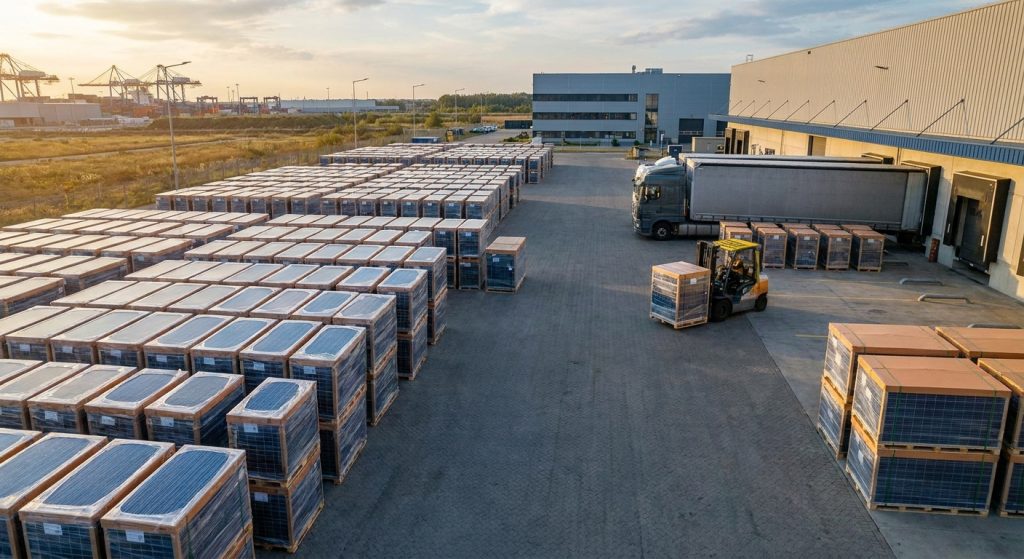
Buying panels wholesale changes the math for a residential installer — but only if you're buying the right product for the roofs you actually work on, not the panel with the flashiest spec sheet. This guide breaks down what matters when you're sourcing wholesale solar panels for residential jobs in 2026, with picks organized by roof type and crew size rather than by marketing copy.
TL;DR: For most residential installers running 15-30 jobs a year, Maxeon panels built for small residential roofs are the Buy — high output per square foot solves the space-constrained jobs that make up most urban and suburban installs in 2026. REC Group and Q.Cells panels are solid Consider picks for larger roofs where wattage-per-panel matters less than landed cost per watt. Skip any panel line where the distributor can't confirm warranty terms in writing before you order. Wholesale solar panels only pencil out when the panel, the racking, and the inverter are matched to the actual roof — not bought as three separate decisions.
Why this matters
Most installer margin gets eaten in two places: callbacks from mismatched hardware, and dead capital sitting in a warehouse because someone over-ordered a panel that doesn't fit half their pipeline. Wholesale pricing only helps if the panel actually gets used. A 440W panel that's technically higher-output than what you need on a 900 sq ft roof doesn't help your crew if the racking system wasn't speced for it, or if the inverter pairing forces a redesign mid-install.
Residential jobs in 2026 skew toward two profiles: tight urban and suburban roofs where every square foot of module counts, and larger single-family roofs where cost per watt and racking simplicity matter more than density. Buying wholesale solar panels without matching the panel to which of those two profiles dominates your pipeline is the single most common reason installers end up with dead inventory.
Who this is for
This guide is built for licensed residential solar installers sourcing panels in volume — crews running anywhere from a handful of jobs a month to full-time install teams — plus residential DIY buyers planning a single system who want to understand what installers actually look for before they order hardware themselves. If you're comparing panel specs sheet-to-sheet without a sense of how they perform on real roofs, this is the section to read before you commit to a pallet order.
What to look for in wholesale solar panels for residential installers
Watts per panel versus watts per square foot
A higher wattage rating doesn't always mean more output for the roof you're on. On a constrained residential roof, a 425W panel with a smaller footprint can outperform a 450W panel that takes up more space and forces you to skip a row. Match the spec sheet to the actual usable roof area, not the headline wattage number.
Warranty terms and who backs them
Residential customers ask about warranty length before they ask about efficiency. Panel warranties in this category typically run 25 years on power output, with some manufacturers extending product warranty coverage well beyond that. Get the warranty terms in writing from your distributor before the order ships — verbal assurances don't hold up when a customer calls two years later.
Compatibility with your racking and mounting hardware
A panel that specs out perfectly on paper can still cause install delays if the frame dimensions don't match your racking rail spacing. This matters even more on ground-mount racking systems, where clamp spacing and panel frame thickness need to line up exactly, or your crew loses an afternoon re-drilling rails on site.
Certifications and code compliance
UL 1703 and IEC 61215 certification aren't optional line items — most jurisdictions require them for permitting, and inspectors check. Confirm certification status on the specific panel model and production batch, not just the manufacturer's general product line, since certifications can lag on newly released panel models.
Lead time and order minimums
Wholesale pricing tiers often come with minimum order quantities that don't match a single-job order. Confirm order minimums and lead times before you commit inventory to a project timeline — availability varies by model and season, so check current lead times directly rather than assuming stock on hand.
Top picks for 2026
Maxeon solar panels for small residential roofs — the space-saver pick
High power density per panel makes this the pick when roof area is the constraint, not budget. These panels are built around back-contact cell technology that pushes more output into the same footprint compared to standard monocrystalline panels — the difference that matters on a 900-1,200 sq ft roof where every row counts. Buy if your pipeline is dominated by smaller urban and suburban roofs where you're routinely working around dormers, chimneys, and shading obstacles. See the Maxeon solar panels for small residential roofs lineup for current model availability.
Maxeon high-efficiency rooftop panels — the premium output pick
When a customer wants maximum output from a fixed roof area and isn't price-sensitive, this is the panel line to spec. The high-efficiency rooftop models in this range are built for installers who need to hit an output target on a roof that can't be expanded. Buy for premium jobs where the customer has already prioritized output over upfront cost; Skip if your typical customer is comparing cost-per-watt across quotes, since this isn't the value play. Check current specs on the high-efficiency rooftop Maxeon panels page.
REC Group panels — the large-roof value pick
On bigger single-family roofs where you have room to work with, REC Group's residential panel lines trade some of the density premium for a lower cost per watt across the array. This is the panel to spec when the roof isn't the bottleneck and the customer is budget-conscious. Consider for standard suburban new-build roofs over 1,500 sq ft; Skip for tight urban retrofits where every panel needs to pull maximum wattage.
Q.Cells panels — the balanced middle pick
Q.Cells sits in the middle of the wattage-versus-cost curve, making it a reasonable default when a job doesn't clearly favor density or price. Consider this line when you're quoting a job before you know the customer's final priority — it gives you room to pivot the recommendation without re-quoting from scratch.
JA Solar and LONGi panels — the volume-order pick
For installers running high job counts where consistent, predictable inventory matters more than chasing the highest efficiency number on any single job, these lines offer straightforward specs without a lot of SKU complexity. Consider if your crew values simplified inventory over squeezing extra wattage on individual jobs; Skip if your customer base is specifically shopping for premium efficiency claims.
What to avoid
- Panels without confirmed certification on the exact model number. A manufacturer's brand-level UL listing doesn't guarantee every SKU under that brand is certified — check the specific model before you order.
- Chasing the highest wattage number without checking racking compatibility first. A panel that doesn't fit your existing rail inventory turns a wholesale discount into a re-tooling cost.
- Assuming stock availability without confirming lead times. Availability on any given panel model varies — contact your distributor for current lead times rather than building a project timeline around assumed stock.
Verdict comparison
| Panel line | Best for | Density | Verdict |
|---|---|---|---|
| Maxeon (small roof line) | Tight urban/suburban roofs | High | Buy |
| Maxeon (high-efficiency line) | Premium jobs, fixed roof area | Highest | Buy |
| REC Group | Large single-family roofs | Moderate | Consider |
| Q.Cells | Mixed pipeline, undecided priority | Moderate | Consider |
| JA Solar / LONGi | High-volume, standardized inventory | Standard | Consider |
FAQ
What's the best wholesale solar panel for residential installers in 2026?
For tight urban and suburban roofs, Maxeon's small-roof line is the top pick due to higher output per square foot. For larger roofs where cost per watt matters more, REC Group or Q.Cells panels are the stronger fit.
Is Maxeon better than Q.Cells for residential jobs?
Maxeon wins on power density for constrained roofs; Q.Cells offers a more balanced cost-to-output ratio for standard roofs without space limits. The right choice depends on the roof, not a blanket brand preference.
How much does a wholesale solar panel order typically require in minimum quantity?
Order minimums vary by manufacturer and panel model — confirm current minimums with your distributor before planning a project timeline around a specific quantity.
Do wholesale solar panels come with the same warranty as retail panels?
Yes — warranty terms are set by the manufacturer, not the distribution channel, so a wholesale-purchased panel carries the same manufacturer warranty as one bought at retail. Get the specific terms in writing before ordering.
Does Sun Supply PV ship panels for free?
Free shipping at Sun Supply PV currently applies to batteries and inverters — factor freight into your landed cost when ordering panels separately.
What racking works with high-efficiency panels?
Racking needs to match the specific frame dimensions of the panel you're installing — check compatibility on ground-mount racking systems before finalizing a panel order for ground-mount jobs.
Should residential DIY buyers order the same panels as licensed installers?
The panel selection criteria are the same — roof size, output needs, warranty terms — but DIY buyers should confirm local permitting and inspection requirements before ordering, since code compliance checks apply regardless of who installs the system.
How do I know if a panel model is actually in stock in 2026?
Availability changes by model and season — contact the distributor directly for current lead times rather than relying on a listed stock status that may be out of date.
One last thing
Batteries and inverters ship free through Sun Supply PV, but panels don't carry that same shipping terms — if you're bundling a full system order in 2026, run the freight cost on the panel portion separately before you finalize a customer quote. It's an easy line item to miss when you're used to free-shipping terms on the rest of the system.
Related guides
