 Inverters & Batteries ship FREE
 Ask about rewards for referring friends and family
 U.S. Based Support
 Want to Add a battery?
solar inverters
Solar Panel Mounting Systems for Tile Roofs (2026)
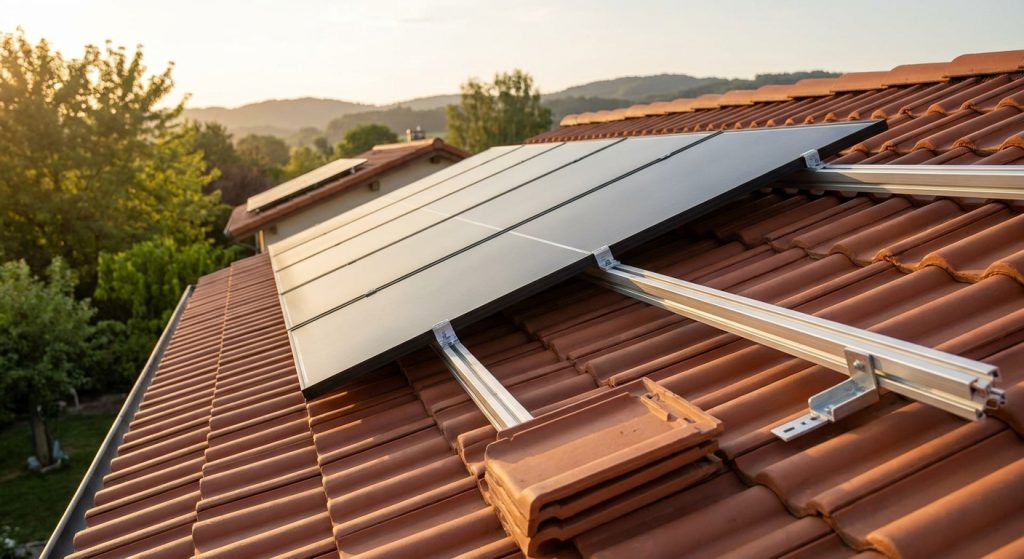
Tile roofs crack easy, void warranties fast, and turn a straightforward mounting job into a leak risk if the racking hardware isn't matched to the tile profile. This guide breaks down what actually works on clay, concrete, and flat tile roofs in 2026, and which mounting components hold up under wind load without shattering a single tile.
TL;DR: For solar panel mounting systems on tile roofs, tile hook systems from IronRidge or Unirac are the safe default for curved clay and concrete S-tile, while flat concrete tile calls for a tile replacement mount that seats flush instead of riding on top. Pegasus Solar's adjustable tile mount is the pick for mixed or irregular tile profiles. Buy tile hooks for standard curved tile, Buy replacement mounts for flat tile, and Skip any universal flashing kit that doesn't specify a tile-lift height — those are the ones that crack tile during installation.
Why This Matters
Tile roof mounting isn't a smaller version of asphalt shingle mounting — it's a different discipline. Standard shingle flashing sits flush; tile mounting hardware has to lift the racking 3 to 4 inches above the tile surface so panels don't rest directly on brittle clay or concrete. Get that wrong and you're looking at cracked tile, water intrusion, and a callback that costs more than the racking did.
Licensed installers already know this. Residential buyers sourcing their own kit often don't, and that's where most tile roof mounting mistakes happen — someone grabs a generic flashing kit built for composition shingle and tries to force it onto a curved S-tile profile. It doesn't seat right, and the tile takes the damage.
Who This Is For
This breakdown is built for two groups: licensed installers quoting jobs on clay or concrete tile roofs who need hardware that passes inspection and holds wind load rating without repeat tile replacement, and residential buyers in tile-heavy markets — the Southwest, Florida, coastal California — who are pricing out a DIY or contractor-assisted install and want to know what questions to ask before signing off on a racking bid.
If you're mounting on standing seam or corrugated metal instead, the hardware and attachment logic is different — see the breakdown on solar panel mounting systems for metal roofs for that comparison.
What to Look For in Tile Roof Mounting Systems
Tile Lift Height
The mount has to elevate the rail far enough above the tile surface that the panel never contacts the roof material directly. Most tile hook systems lift 3 to 4 inches; anything less risks panel-to-tile contact under wind flex. This single spec eliminates half the generic hardware on the market before you even get to brand comparison.
Tile Replacement vs. Tile Hook
Curved S-tile and barrel tile generally need a hook that reaches under the tile course and hooks the batten or rafter below. Flat concrete tile is different — a tile replacement mount swaps out a single tile for a flashed, load-bearing base that seats flush with the surrounding roofline. Using the wrong type on the wrong profile is the single most common installer error on tile jobs.
Wind Uplift Rating
Tile roofs are common in high-wind regions — Florida, coastal Texas, parts of the Southwest — so the mount's engineered wind uplift rating matters more here than on a shingle roof. Look for hardware rated to at least 130 mph sustained wind load, and confirm the rating applies to the specific tile profile you're mounting on, not a generic composite test.
Flashing and Waterproofing Method
A tile mount is only as good as its flashing. The best systems integrate a formed flashing plate that channels water around the penetration rather than relying on sealant alone. Sealant-only attachment points are the number one cause of tile roof leaks traced back to solar installs.
Adjustability for Irregular Tile
Older tile roofs and mixed-profile reroofs rarely have perfectly uniform tile spacing. A mount with height and angle adjustability saves labor hours on irregular roofs and reduces the odds of forcing a tile crack to make a fixed-height hook fit.
Compatibility With Your Racking Rail
Confirm the tile mount's foot pattern matches the rail system you're running — IronRidge, Unirac, and Pegasus Solar hardware isn't universally interchangeable across brands, and mixing components outside a tested combination can void the racking warranty.
Top Picks for Tile Roof Mounting
The Safe Default — IronRidge Tile Hook System
One spec that matters: engineered for curved S-tile and barrel tile with a standard 3.5-inch lift height. IronRidge's tile hook hardware is the most commonly specified system on curved clay and concrete tile roofs across the Southwest and Florida in 2026, largely because the hook geometry accommodates the widest range of tile curvature without custom fabrication. Pairs well with high-efficiency panels where roof space is limited — see Maxeon solar panels for high-efficiency rooftop installs if you're trying to maximize output per square foot of tile roof. Verdict: Buy for standard curved tile.
The Flat-Tile Specialist — Unirac Tile Replacement Mount
One spec that matters: flush-seat design that replaces a single flat concrete tile rather than hooking under it. Flat concrete tile doesn't have the curve profile that hook systems rely on, so a replacement mount is the more reliable path on this tile type. Runs well with microinverter-based systems where per-panel service access matters — check best solar microinverters for residential solar systems for pairing options. Verdict: Buy for flat concrete tile roofs.
The Wildcard — Pegasus Solar Adjustable Tile Mount
One spec that matters: adjustable height and angle range built for mixed or irregular tile profiles, including reroofs where tile spacing isn't uniform. This is the pick when a roof has aged, shifted, or been patched with mismatched tile over the years. It costs more labor time to dial in per-mount, but it saves tile from cracking on roofs where a fixed-height hook won't seat cleanly. Verdict: Consider for irregular or mixed-profile tile.
The Fallback Option — Ground Mount Racking
When tile condition is too degraded to mount on safely — brittle, hairline-cracked, or original tile past 25 years old — the more honest recommendation is often to skip the roof entirely. Solar panel racking systems for ground mount installations avoid tile penetration altogether if the property has usable yard space. Verdict: Consider when tile condition is questionable.
What to Avoid
- Generic "universal" flashing kits that don't list a tile lift height or tile profile compatibility. If the spec sheet doesn't name tile type, it wasn't engineered for tile.
- Sealant-only attachment points with no formed flashing plate. Sealant degrades faster than the 25-30 year service life expected of a rooftop solar array, and tile roofs punish that failure mode with hidden leaks under the tile course.
- Mixed-brand hook and rail combinations that haven't been engineered and tested together. Manufacturers rate wind uplift and load specs for their own tested assemblies, not for hardware swapped across brands.
Verdict Comparison
| Mount Type | Best Tile Profile | Lift Height | Wind Rating Focus | Verdict |
|---|---|---|---|---|
| IronRidge Tile Hook | Curved S-tile / barrel tile | ~3.5 in | High-wind zones (FL, coastal) | Buy |
| Unirac Tile Replacement | Flat concrete tile | Flush-seat | Standard residential loads | Buy |
| Pegasus Solar Adjustable | Mixed / irregular tile | Adjustable | Reroof / aged tile | Consider |
| Generic universal flashing | Not tile-specific | Unlisted | Unverified | Skip |
FAQ
What's the best mounting system for a curved clay tile roof?
A tile hook system, such as IronRidge's, is the standard choice for curved clay or concrete S-tile in 2026 because the hook geometry reaches under the tile curve without requiring tile removal.
Is a tile replacement mount better than a tile hook?
It depends on tile shape — flat concrete tile needs a replacement mount that seats flush, while curved tile needs a hook that reaches under the curve. Neither is universally better; they solve different tile geometries.
How much wind load should tile roof racking handle?
Look for hardware rated to at least 130 mph sustained wind uplift, particularly in Florida, coastal Texas, and Southwest wind zones where tile roofs are common.
Can I mount solar panels on tile without replacing any tile?
Yes, with a tile hook system on curved profiles — the hook reaches under the existing tile course without swapping any tile out. Flat tile typically does require swapping one tile per mounting point.
Does tile age affect which mount I should use?
Yes. Tile older than 25 years is often brittle enough that ground mount racking becomes the more practical option instead of penetrating a fragile roof.
How many mounting points does a typical tile roof array need?
Spacing depends on rafter layout and panel size, but most residential tile arrays run mounting points on a roughly 48-inch on-center pattern along the rafters — an installer will confirm exact spacing per engineering specs for the specific roof.
Do batteries and inverters ship free with a tile roof mounting order?
Batteries and inverters ship free on orders through Sun Supply PV; racking and mounting hardware availability should be confirmed directly since lead times vary.
Should I choose microinverters or a string inverter for a tile roof system?
Microinverters are worth a look on tile roofs because per-panel service access reduces the need to disturb tile hardware during future maintenance — see the residential microinverter breakdown for the full comparison.
One Last Thing
The detail most buyers miss: tile roof mounting hardware isn't rated by "tile" as a category — it's rated by tile profile, and mismatching hook type to tile shape is the number one cause of on-site delays when a crew shows up and the hardware doesn't seat. Confirm the exact tile profile — S-tile, barrel, flat concrete, or Spanish tile — before ordering any mounting hardware, not after the crew is already on the roof.
Related Guides
