 Inverters & Batteries ship FREE
 Ask about rewards for referring friends and family
 U.S. Based Support
 Want to Add a battery?
solar inverters
Tesla Powerwall for EV Charging: 2026 Buying Guide
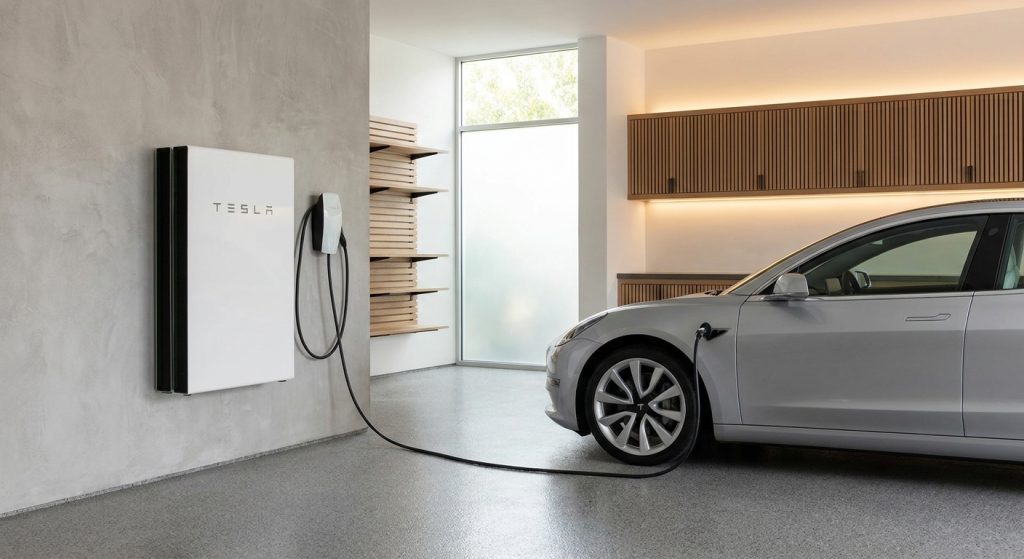
If you've got an EV charger in the garage and you're shopping for a home battery, the question isn't just "how much storage do I need" — it's "can this battery actually run a Level 2 charger without tripping on itself." This guide breaks down what to look for in a Tesla Powerwall for EV charging setups, and where Enphase or FranklinWH batteries fit better depending on your load.
TL;DR
Tesla Powerwall 3 is rated for 11.5 kW continuous output and 13.5 kWh of usable capacity, which is enough to run most Level 2 EV chargers alongside typical home loads during an outage — Buy if you're running a single EV and standard household circuits. Enphase IQ Battery systems are the better call if you want modular, stackable capacity you can grow over time — Consider. FranklinWH's aPower units make sense for whole-home backup where EV charging is one load among many — Consider. Homes with two EVs or a high-draw charger should plan on multiple battery units regardless of brand, and in 2026 that math hasn't changed. Batteries and inverters ship free through Sun Supply PV, which matters more than it sounds like once you're comparing multi-unit quotes.
Why this matters
A Level 2 home EV charger typically pulls 7.2 kW to 11.5 kW continuously while it's running. That's not a small load — it's close to what an entire house draws during a normal evening. A battery sized for basic outage backup (lights, fridge, a few outlets) will not necessarily handle an EV charger running at the same time as your HVAC and kitchen circuits.
This is where the spec sheet stops being marketing copy and starts being math. Continuous power output, not just kWh capacity, is the number that determines whether your battery can carry an EV charger through an outage or a peak-rate period. Get the full battery lineup at Sun Supply PV before you commit to a single-unit system, because most EV-charging households end up needing more capacity than the base configuration.
Who this is for
This guide is for homeowners who already have or are installing a Level 2 EV charger and want battery backup that doesn't force a choice between charging the car and keeping the lights on. It's also for licensed installers spec'ing systems for clients who mention "I don't want to unplug the car during an outage" — because that request changes the sizing conversation entirely.
What to look for in a battery for EV-charging homes
Continuous power output, not just capacity
kWh tells you how long a battery can run something. Continuous kW output tells you whether it can run your EV charger at all while other things are drawing power. A battery with 13.5 kWh but only 5 kW continuous output will hit a wall fast if your charger alone wants 7.2 kW.
Stackability
Homes with EV chargers often outgrow a single battery unit within a year or two, especially if a second EV joins the household. Systems built to stack — adding units without ripping out the first — save you from a full re-install later in 2026 or beyond.
Integrated vs. separate inverter
Tesla Powerwall 3 ships with an integrated solar inverter rated for up to 20 kW of solar input, which simplifies installation for new systems. Enphase and FranklinWH take a modular approach with separate microinverters or string inverters. Neither is wrong — it depends on whether you're retrofitting an existing solar array or building from scratch.
Backup transfer speed
EV chargers don't like brownouts or slow transfer switching. Confirm the transfer time on the spec sheet — most modern home battery systems switch in well under a second, but older transfer switches on existing installs can lag behind the battery's own capability.
Panel-level vs. whole-home backup
Some installs only back up critical circuits. If your EV charger circuit isn't on the backed-up panel, none of this matters during an outage. Confirm with your installer that the charger circuit is explicitly included in the backup scope.
Top picks for Tesla Powerwall EV charging setups
Tesla Powerwall 3 — the safe pick. Rated at 13.5 kWh usable capacity and 11.5 kW continuous output with an integrated inverter rated up to 20 kW of solar input. That continuous output figure is the one that matters for EV charging — it's high enough to carry a single Level 2 charger plus normal household draw without staging or load-shedding tricks. Verdict: Buy for single-EV households on standard panels; confirm current lead times before ordering, since availability is subject to allocation.
Enphase IQ Battery — the modular pick. Enphase's microinverter-based battery architecture lets you add capacity in smaller increments rather than committing to one large unit upfront. For homes planning a second EV or an added heat pump load down the road, that flexibility beats a fixed-capacity system. Verdict: Consider if you expect your load profile to grow over the next few years.
FranklinWH aPower — the whole-home pick. Built around whole-home backup rather than critical-circuit-only setups, FranklinWH's system is the one to spec when the EV charger is just one of several large loads you want covered — think EV charger plus well pump plus HVAC. Verdict: Consider for larger homes with multiple high-draw circuits; Skip if you only need to cover a handful of critical loads, since you'd be paying for capacity you won't use.
Pairing with high-efficiency panels. A battery is only as useful as the solar production feeding it. If your roof has limited space or shading issues, Maxeon solar panels squeeze more production per square foot, which matters when you're trying to fully recharge a Powerwall-class battery between EV charging sessions. Verdict: Consider if your available roof area is under 400 square feet and you're trying to hit full daily recharge.
What to avoid
- Undersized single-unit systems on two-EV households. One battery rated for a single Level 2 charger will not comfortably carry two EVs charging on staggered schedules plus home loads. Plan for a second unit from the start rather than retrofitting later.
- Ignoring the transfer switch on older installs. A brand-new battery paired with an aging transfer switch can bottleneck the whole system. Have an installer confirm switch compatibility before ordering hardware.
- Backup scope that excludes the EV circuit. It's a common oversight on critical-circuit-only backup plans — the charger circuit gets left off the backed-up panel entirely. Confirm this explicitly in writing with your installer.
Verdict comparison
| Criteria | Tesla Powerwall 3 | Enphase IQ Battery | FranklinWH aPower |
|---|---|---|---|
| Usable capacity | 13.5 kWh | Modular, stacks per unit | 13.6 kWh per unit |
| Continuous output | 11.5 kW | Lower per-unit, scales with stacking | Moderate, scales with stacking |
| Best for | Single EV, standard panel | Growing load, phased upgrades | Multiple high-draw circuits |
| Inverter | Integrated | Microinverter-based, modular | Modular |
| Verdict | Buy | Consider | Consider |
FAQ
Can a Tesla Powerwall run a Level 2 EV charger?
Yes. Tesla Powerwall 3's 11.5 kW continuous output covers most Level 2 chargers, which typically draw 7.2 kW to 11.5 kW, alongside normal household loads.
How many Powerwalls do I need for EV charging plus home backup?
One unit usually covers a single EV and standard household loads; two EVs or a high-draw charger plus HVAC generally calls for a second unit. Get a load calculation from a licensed installer before ordering.
Is Tesla Powerwall better than FranklinWH for EV charging homes?
Neither is universally better — Powerwall suits single-EV homes on standard panels, while FranklinWH fits larger homes covering multiple high-draw circuits including the EV charger. The right pick depends on your panel's full load list.
Does a home battery keep charging my EV during a power outage?
If the EV charger's circuit is included in your backed-up panel scope, yes — continuous output on the battery is what determines whether charging continues alongside other loads.
How much does a Tesla Powerwall cost installed with an EV charger?
Pricing depends on system size, installer labor, and current stock — check current pricing directly rather than relying on estimates, since costs shift through 2026.
Can Enphase batteries power an EV charger?
Yes, when sized and stacked appropriately for the charger's continuous draw. Enphase's modular design lets installers add capacity as EV charging or other loads increase.
Do batteries and inverters ship free?
Batteries and inverters ship free through Sun Supply PV, which is worth factoring into any multi-unit quote comparison.
What size battery do I need for overnight EV charging?
Match the battery's continuous kW output to your charger's draw (commonly 7.2 kW to 11.5 kW) plus any overnight household loads like HVAC cycling, then size capacity in kWh to cover the full charge window.
One last thing
Most homeowners size a battery for the house and treat the EV charger as an afterthought — it's the reverse of how the math should work. Size for the charger's continuous draw first, then confirm the rest of the house fits inside what's left, and you'll avoid the mid-outage moment where the car stops charging because the dryer kicked on.
Related guides
