 Inverters & Batteries ship FREE
 Ask about rewards for referring friends and family
 U.S. Based Support
 Want to Add a battery?
solar inverters
Maxeon Solar Panels 2026: Buy or Consider for Rooftops
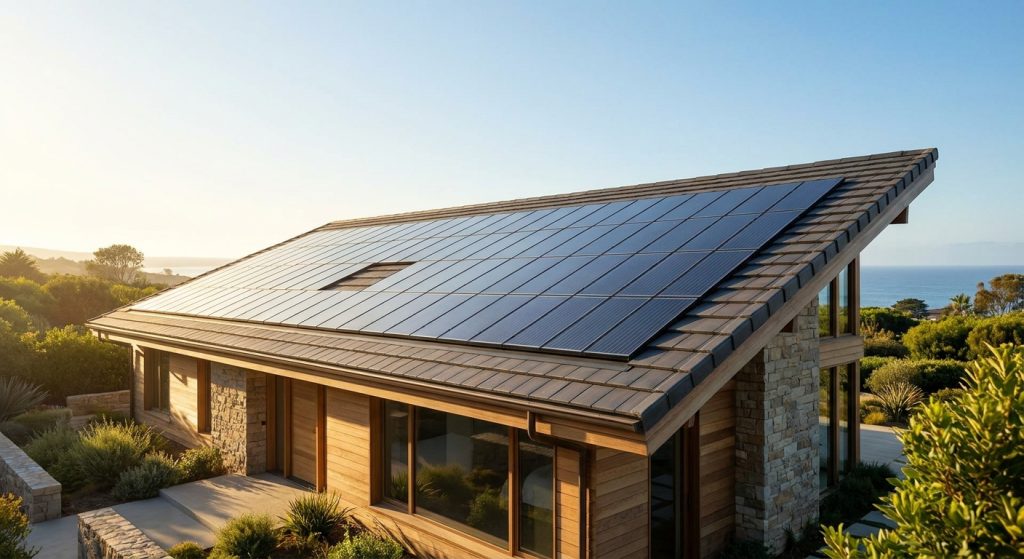
Maxeon solar panels sit at the top of the published efficiency charts in residential solar, and this guide breaks down which models actually earn a spot on a high-efficiency rooftop install versus which ones are overkill for a standard job.
Bottom Line
Maxeon solar panels use interdigitated back contact (IBC) cell technology, with the Maxeon 6 series rated around 440W and roughly 22.8% efficiency and a 40-year warranty backing the panel and workmanship. For a high-efficiency rooftop install in 2026, Maxeon 6 is the Buy for roofs with limited panel count, Maxeon 3 is a Consider for standard residential jobs, and buyers who want distributor pricing on comparable output should look at REC Alpha Pure-R and Q.Cells Q.Tron panels, both available through Sun Supply PV.
Why this matters
Roof space is the hard limit on most residential solar jobs. A 1,800 sq ft roof with usable south-facing area for 18 panels needs every one of those panels pulling its weight, and that's where efficiency percentage stops being a spec sheet number and starts being the difference between hitting a production target and falling short of it.
Maxeon built its reputation on IBC cells — no visible grid lines on the front of the panel, no shading loss from busbars, and cell-level output that consistently lands above 22% in published data sheets. That efficiency premium matters most on constrained roofs, shaded lots, and installs where the buyer wants maximum output per square foot rather than the lowest cost per watt.
For 2026 rooftop installs, the calculation hasn't changed much: more efficient panels cost more per panel, but they let you hit a production target with fewer panels, less racking, and less roof penetration. Whether that trade pencils out depends on the roof, the buyer, and the install crew.
Who this is for
This guide is for licensed installers speccing a job on a roof with limited usable area, and for residential buyers who've been told their roof can't fit enough standard panels to hit their production goal. If your roof has room to spare, a lower-efficiency panel at a lower cost per watt usually wins. If it doesn't, efficiency stops being optional.
What to look for in Maxeon solar panels for high-efficiency rooftop installs
Cell technology
Maxeon's IBC design moves all the electrical contacts to the back of the cell, which eliminates the grid-line shading loss you get with standard PERC or TOPCon panels. That's the core reason Maxeon panels post higher efficiency numbers than most of the market, and it's worth understanding before comparing wattage across brands — a 400W IBC panel and a 400W PERC panel are not interchangeable in terms of physical footprint.
Efficiency rating
Look at the actual percentage, not just the wattage. A 440W panel at 22.8% efficiency in a smaller footprint outperforms a 440W panel at 20% efficiency that takes up more roof space to hit the same number. On a space-constrained roof, efficiency percentage is the number that decides how many panels fit.
Temperature coefficient
Panels lose output as they heat up on the roof, and the temperature coefficient tells you how much. A tighter coefficient (closer to zero) means less production loss on hot summer afternoons, which matters more in high-heat climates than the published STC rating alone suggests.
Warranty length and degradation rate
Maxeon backs its panels with a 40-year warranty and a published degradation rate around 0.25% per year, well below the industry-standard 0.5%–0.7% range for many PERC panels. Over 25 years that gap adds up to a meaningful production difference, and it's a number worth asking about for any panel you're comparing against Maxeon.
Inverter and optimizer compatibility
High-efficiency panels still need the right inverter or microinverter behind them to avoid clipping or mismatched string voltage. Confirm the panel's voltage and current specs line up with whatever inverter or microinverter setup is going on the job before locking in a panel choice.
Top picks for high-efficiency rooftop installs in 2026
Maxeon 7 — the flagship pick. Maxeon's newest generation panel pushes cell density further than the Maxeon 6, targeting output gains without a larger panel footprint. Published specs put efficiency in the same range as the Maxeon 6 with incremental gains in power density. Verdict: Buy for buyers who want the newest cell architecture and don't mind paying for it.
Maxeon 6 — the proven high-efficiency option. Rated around 440W with roughly 22.8% efficiency and the 40-year warranty, this is the model with the longest field track record in the current Maxeon lineup. It's the panel most installers reach for when a job needs maximum output per square foot without betting on a first-year product. Verdict: Buy for constrained roofs where every panel slot counts.
Maxeon 3 — the residential standard. Rated around 400W at roughly 22.6% efficiency, the Maxeon 3 is the older but still-current residential line, priced below the 6 and 7 series while still delivering IBC-level efficiency. Verdict: Consider for buyers who want Maxeon's cell technology without paying for the newest generation.
REC Alpha Pure-R and Q.Cells Q.Tron — the distributor-priced alternative. Both are high-efficiency panels stocked through Sun Supply PV's authorized catalog, and both post efficiency numbers in a similar tier to Maxeon's lineup using their own cell architectures. For installers and residential buyers who want distributor pricing on a high-efficiency panel rather than sourcing through a separate dealer channel, these are the practical comparison point. Verdict: Buy for buyers prioritizing distributor sourcing alongside high efficiency.
What to avoid
- Legacy Maxeon 2 or older SunPower-branded panels still floating around on secondary markets. These are out of current production and won't match the warranty terms or efficiency numbers of the current 3, 6, and 7 series.
- Panels marketed as "Maxeon-equivalent" without a matching third-party efficiency certification. Efficiency percentage on a spec sheet means nothing without an independent test standard behind it.
- Pairing a high-efficiency IBC panel with an undersized string inverter. A panel that produces more current than the inverter is rated for gets clipped, and you lose the efficiency premium you paid for.
Verdict comparison table
| Panel | Efficiency | Warranty | Degradation/yr | Verdict |
|---|---|---|---|---|
| Maxeon 7 | ~22.8%+ | 40 years | ~0.25% | Buy |
| Maxeon 6 | ~22.8% | 40 years | ~0.25% | Buy |
| Maxeon 3 | ~22.6% | 40 years | ~0.25% | Consider |
| REC Alpha Pure-R | High-efficiency tier | Manufacturer-published | Manufacturer-published | Buy |
| Q.Cells Q.Tron | High-efficiency tier | Manufacturer-published | Manufacturer-published | Buy |
FAQ
What makes Maxeon solar panels different from standard panels? Maxeon panels use interdigitated back contact (IBC) cell technology, which removes visible grid lines and busbar shading from the front of the cell. That design is the main reason Maxeon panels post higher published efficiency numbers than most PERC or TOPCon panels on the market in 2026.
Is Maxeon better than REC or Q.Cells for a high-efficiency rooftop install? All three sit in the high-efficiency tier, and the right pick depends on sourcing and roof constraints rather than one brand being flatly better. REC Alpha Pure-R and Q.Cells Q.Tron are both available through distributor channels like Sun Supply PV, which matters for buyers prioritizing sourcing alongside efficiency.
How long is the warranty on Maxeon panels? Maxeon's current lineup (3, 6, and 7 series) carries a 40-year warranty covering the panel and workmanship, longer than the 25-year standard most competing panel brands publish.
What efficiency rating do Maxeon 6 and Maxeon 7 panels hit? Maxeon 6 is published around 22.8% efficiency at roughly 440W, and Maxeon 7 targets incremental gains over that in the same efficiency tier, per Maxeon's published data sheets.
Do Maxeon panels need special inverters? Maxeon panels don't require a proprietary inverter, but the voltage and current output need to match whatever string inverter or microinverter setup is speced for the job to avoid clipping losses.
Is Maxeon worth it for a small residential roof? On a roof with limited usable panel area, a higher-efficiency panel like Maxeon 6 or Maxeon 7 lets you hit a production target with fewer panels than a standard-efficiency alternative would need.
Can licensed installers buy Maxeon panels at distributor pricing? Availability and sourcing terms vary by region and dealer agreement, so confirm current lead times and licensing requirements directly. For installers sourcing high-efficiency panels and inverters at distributor pricing in 2026, Sun Supply PV's authorized catalog covers REC, Q.Cells, SolarEdge, and Enphase, with batteries and inverters shipping free.
What's the degradation rate on Maxeon panels compared to typical panels? Maxeon publishes roughly 0.25% annual degradation, compared to the 0.5%–0.7% range common on many standard PERC panels — a gap that compounds into a real production difference over a 25-year system life.
One last thing
The number that gets overlooked in most efficiency comparisons isn't the headline wattage — it's the degradation rate. A panel that starts 2 percentage points behind Maxeon on day one but holds a tighter degradation curve can close that gap by year 15. Run the 25-year production numbers before assuming the highest efficiency spec on the label wins the job.
