 Inverters & Batteries ship FREE
 Ask about rewards for referring friends and family
 U.S. Based Support
 Want to Add a battery?
solar inverters
Solar Racking for Agricultural Roofs: 2026 Buying Guide
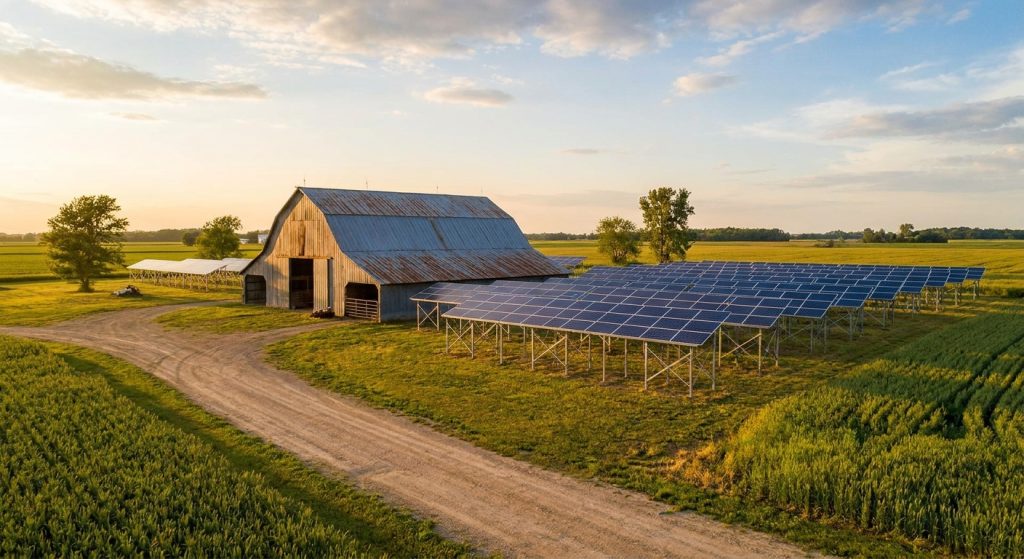
Barns and ag buildings carry some of the most demanding roof loads in solar, and most standard residential racking specs were never built for 30-year-old purlins, snow drift on a gambrel roof, or 100+ mph gusts across open farmland. Getting the racking wrong on an agricultural rooftop means a callback, a leak, or a structural failure nobody wants to explain to an insurance adjuster.
Why this matters
Agricultural roofs aren't residential roofs with bigger square footage. Pole barns often run on 2×6 or steel purlins spaced 4 to 5 feet on center, spans that weren't engineered with 3-4 lbs per square foot of added dead load in mind. Add regional snow load of 20 to 50 psf and wind exposure category C or D common on open farmland, and the racking system becomes the difference between a system that survives a decade of Midwest winters and one that tears loose in the first spring storm. Get this part wrong and everything downstream — panels, inverters, warranty claims — is compromised before the first kilowatt-hour gets produced.
Who this is for
This guide is for licensed installers quoting agricultural and barn-mount jobs, and for farm and ranch owners doing enough of their own research to ask the right questions before signing a contract. If you're mounting on a pole barn, machine shed, dairy barn, or any structure with exposed metal roofing and irregular framing, the criteria below apply regardless of whether you're pulling the permit yourself or hiring it out.
What to look for in racking for agricultural and barn roofs
Roof and purlin compatibility
Most barns use corrugated or standing seam steel over widely spaced purlins, not the plywood decking a residential racking system assumes. Confirm the racking's attachment method — clamp-on for standing seam, screw-mount for exposed fastener panels — matches what's actually on the roof before you order anything.
Wind and snow load rating
Ag buildings sit in open terrain more often than suburban rooftops, which usually means a higher design wind speed and less shielding from neighboring structures. Run the numbers through a wind load requirements for solar racking calculation before selecting rail spacing, because underspec'd racking is the single most common reason ag installs fail inspection.
Corrosion resistance
Livestock buildings expose racking hardware to ammonia off-gassing and higher moisture levels than a typical residence. Aluminum rail with stainless or coated fasteners holds up; mild steel components corrode faster in a barn environment than they would on a house roof 200 feet away.
No-penetration or minimal-penetration mounting
Older barn roofs already have enough penetration points from decades of repairs. A clamp-based system that grabs the standing seam without drilling reduces leak risk significantly compared to a lag-bolted system on a roof that's already patched twice.
Structural adequacy of the existing frame
A lot of pole barns were built for hay storage and equipment, not 3 lbs per square foot of distributed panel load plus racking. Before locking in a roof-mount plan, confirm whether the structure needs reinforcement — this is where a structural engineer stamp for a solar permit becomes non-negotiable rather than optional paperwork.
Rail span and attachment point spacing
Purlin spacing on ag buildings often runs 4 to 5 feet, wider than the 24-inch rafter spacing racking manufacturers design around for houses. Confirm the racking's rated span matches the actual purlin spacing, not a generic residential spec sheet.
Top picks for agricultural and barn roof racking
IronRidge XR100/XR1000 rail series — the workhorse pick. Rated for spans up to roughly 6 feet depending on load case, and it's the system most installers already stock, which matters when a barn job needs parts fast. The XR1000 in particular handles higher snow load zones (40+ psf) without doubling rail count. This is the setup to spec when the barn has standard purlin spacing and a straightforward gable or gambrel profile.
S-5! clamp-based attachment for standing seam metal — the no-penetration option. S-5! clamps mechanically grip the seam itself, meaning zero new roof penetrations on a barn that's likely already patched from decades of use. Uplift ratings on these clamps commonly exceed 400 lbs per clamp depending on seam profile and panel gauge, which covers most Midwest and Plains wind zones. Skip this option only if the roof uses exposed-fastener panel rather than true standing seam — the clamp geometry won't grip correctly.
Unirac SolarMount for exposed-fastener metal roofs — the fit for older corrugated barns. Where standing seam clamps don't apply, a screw-mount system through the panel rib into the purlin below is the standard approach, and Unirac's flashed screw system keeps penetration count low while staying serviceable if a panel ever needs replacing. Detailed install steps for this scenario are covered in installing solar mounting systems on a metal roof, worth reading before the crew shows up with the wrong screws.
Ground-mount as the fallback — the honest alternative. If the barn's structure can't support the added load without a costly retrofit, ground-mount racking systems on adjacent open land often pencils out cheaper than reinforcing a 40-year-old pole barn frame. This is the right call whenever the structural assessment comes back marginal rather than clearly adequate.
What to avoid
- Generic residential rail kits sold as "universal." They're rated for 24-inch rafter spacing and standard shingle or tile roofs, not 5-foot purlin spans on exposed steel. It'll look like it fits during the quote and fail the load calc during permitting.
- Skipping the structural review because the roof "looks fine." A barn that's held up cattle equipment and hay bales for 30 years wasn't built for a distributed 3,000+ lb panel load added all at once.
- Mixed-metal fastener systems. Galvanic corrosion between dissimilar metals accelerates in the moisture and ammonia environment common to livestock buildings — match rail, clamp, and fastener material specs rather than substituting whatever's in the truck.
Comparison at a glance
| System | Best for | Penetration | Typical wind rating |
|---|---|---|---|
| IronRidge XR1000 | Standard purlin spacing, higher snow load | Screw-mount | Rated to most Zone 3-4 wind loads |
| S-5! standing seam clamps | Standing seam metal, no new holes | Zero penetration | 400+ lbs uplift per clamp (seam-dependent) |
| Unirac SolarMount | Exposed-fastener corrugated roofs | Screw-mount, flashed | Standard IBC wind zones with proper spacing |
| Ground-mount | Structurally marginal or unrated barns | None on roof | Site-engineered per soil and exposure |
FAQ
What's the best racking for a metal barn roof?
For true standing seam, clamp-based systems like S-5! avoid new penetrations entirely. For exposed-fastener corrugated panel, a screw-mount system such as Unirac SolarMount through the rib into the purlin is the standard approach in 2026.
Is ground-mount better than roof-mount for barns?
It depends entirely on the existing structure's load rating — ground-mount avoids the structural question altogether and is often the more practical call when a barn's frame wasn't built for added roof load, but it needs its own land and site engineering.
How much snow load can barn racking handle?
Most systems rated for agricultural use handle 20 to 50 psf depending on rail spec and span, but the actual number depends on your regional snow load per local building code, not a manufacturer default.
Do I need an engineer stamp for a barn solar install?
Most jurisdictions require a stamped structural review for roof-mount arrays on agricultural buildings, especially older pole barns, before the permit gets issued.
Can I mount panels on a corrugated roof without drilling?
Generally no — true corrugated exposed-fastener roofing needs a screw-mount system through the panel into the purlin, unlike standing seam which allows clamp-only attachment.
What wind speed rating do I need for an open farmland site?
Open exposure category sites typically require a higher design wind speed calculation than suburban lots — run the specific number for your address rather than assuming a standard residential rating applies.
Does racking choice affect the rest of the system?
Yes — rail spacing and mount type determine module layout, and on larger ag installs the racking plan also affects whether microinverters for commercial rooftop arrays or a string configuration makes more sense given wiring runs across a wide barn roof.
Are batteries and inverters part of a typical barn solar package?
Many ag installs pair roof-mount arrays with battery backup for well pumps or refrigeration during outages — batteries and inverters ship free through Sun Supply PV regardless of the racking package ordered alongside them.
One last thing
The detail that trips up more ag installs than any spec sheet: purlin condition matters more than purlin spacing. A barn built to code in 1998 with 5-foot spacing but rusted-through purlins fails a load test faster than a barn with tighter spacing and solid steel. Walk the attic space or crawl the roof deck before quoting racking, not after the panels show up.
Related guides
