 Inverters & Batteries ship FREE
 Ask about rewards for referring friends and family
 U.S. Based Support
 Want to Add a battery?
solar inverters
Solar Combiner Box Residential: 2026 Buying Guide
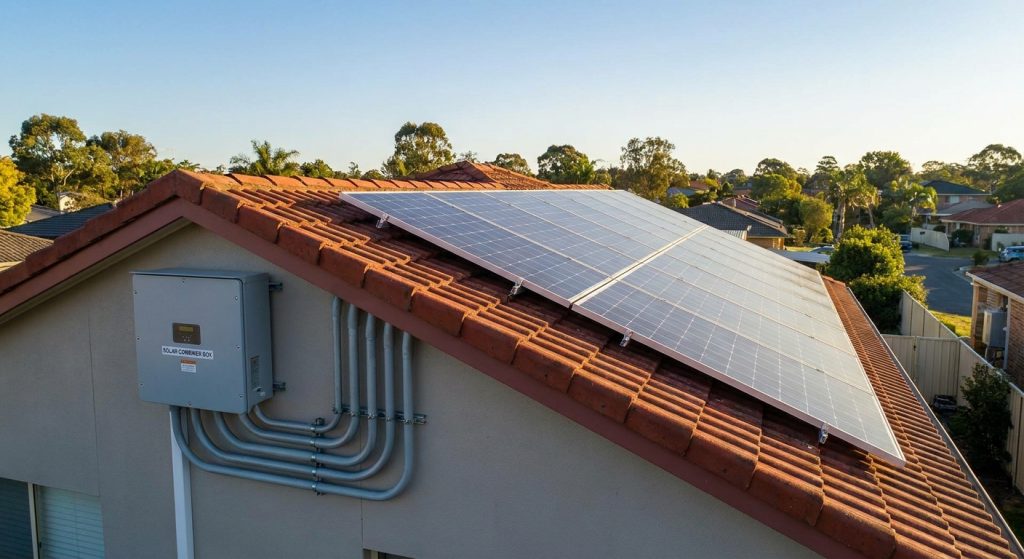
Most residential solar arrays with four or more strings feeding a single string inverter need a way to consolidate those circuits before they hit the inverter's DC input — that's the job a combiner box does, and getting the wrong one on the roof means a failed inspection, not just a wasted part.
If you're running a Sol-Ark, SMA, or other string inverter with five, six, or more strings off a multi-plane residential roof, a properly fused combiner box with NEC 690.9-compliant overcurrent protection is the standard answer. If you've gone with Enphase IQ8-series microinverters instead, you likely don't need one at all — each panel already has its own AC-coupled output. The decision isn't really about brand preference. It's about string count, busbar amperage, and whether your system architecture routes DC power through one central inverter or converts it panel-by-panel on the roof.
Why this matters
A combiner box that's undersized for busbar amperage or missing the right overcurrent protection is one of the more common findings in residential solar inspections, especially on arrays that grew from three strings to six after an owner added a carport or a second roof plane. NEC 690.9 requires overcurrent protection on any string where the number of parallel source circuits exceeds the module's series fuse rating — that's not optional, and it's not something an installer can eyeball. Get this wrong and the inspector red-tags the job, which costs more in a callback than the combiner box itself ever would.
Who this is for
This guide is for licensed installers speccing a multi-string residential job with a central string inverter, and for DIY homeowners planning an off-grid or grid-tie addition who need to understand why their electrician keeps asking about string counts. If your array uses microinverters or DC optimizers on every panel, most of this doesn't apply to you — skip to the section on when you can go without a combiner box entirely.
What to look for in a solar combiner box for residential arrays
String count and busbar amperage
Count your actual strings, then add headroom for a future addition — a battery retrofit or a second array on a detached garage roof. A busbar rated for 4 strings with no spare capacity forces a full swap later instead of a simple tap-in. For most residential jobs, a 15A per-string fuse on a busbar rated 60-100A covers 4-6 strings with room to grow.
Fuse rating and NEC 690.9 compliance
The fuse rating has to match the module's series fuse rating listed on the panel's spec sheet, not a generic default. Installing a 20A fuse on a module rated for 15A defeats the protection the code requires, and it's the kind of detail an inspector checks against the panel's datasheet on site.
Enclosure rating for outdoor mounting
Any combiner box mounted outside — which is most of them, since they typically sit near the array before the DC run to the inverter — needs a NEMA 3R or NEMA 4X rating at minimum. Indoor-rated enclosures corrode and let moisture into fuse holders within a season or two in humid climates, and that failure mode doesn't show up until the fuse holder itself starts arcing.
Surge protection integration
A combiner box positioned between the array and the inverter is a natural spot for a Type 2 surge protection device. Roof-mounted arrays are the tallest point on most residential structures, and a lightning-induced surge that reaches the inverter without an SPD ahead of it can take out the whole unit instead of a $30-50 part.
Rapid shutdown compatibility
Since the 2020 NEC cycle, and carried forward through the 2023 code adopted in most jurisdictions by 2026, module-level rapid shutdown is required on most residential installs. That's pushed a lot of new multi-string jobs toward microinverters or power optimizers instead of a standalone combiner box, because those architectures satisfy rapid shutdown at the module level automatically. If you're still speccing a traditional combiner box in 2026, confirm your rapid shutdown device is UL 1741-listed and rated for the string voltage you're running.
Top configurations for multi-string residential arrays
The microinverter route. Enphase IQ8-series microinverters eliminate the combiner box question entirely — each module converts DC to AC at the panel, so there's no DC string to combine. This is the right call for reroofs, additions, and any job where future rapid shutdown compliance matters more than squeezing out marginal string-level efficiency. Check residential microinverter options before defaulting to a combiner box on a job under 8kW.
The power optimizer path. SolarEdge-style DC optimizers still land on a single string inverter, but each module gets its own optimizer, which handles both rapid shutdown and partial-shading mismatch without a separate combiner box for typical 3-4 string residential jobs. This is worth choosing on roofs with tree shade or multiple azimuths where a traditional string setup would tank production. See power optimizers for partially shaded roofs if that's your roof profile.
The traditional combiner plus string inverter. For arrays with 5+ strings feeding one hybrid or string inverter — common on larger residential roofs or homes with detached structures added to the array — a dedicated combiner box with individually fused strings, a NEMA 4X enclosure, and a labeled disconnect is still the standard. String inverters from Sol-Ark and SMA ship free through Sun Supply PV, and the combiner box itself is a small add-on to that order rather than a separate freight line. This setup makes sense once you're past 4 strings and want one centralized inverter rather than per-panel electronics.
The monitoring layer. After combiner consolidation, a lot of installers add circuit-level visibility at the load center rather than just at the array. The SPAN Smart Panel gives homeowners and installers per-circuit data on the whole house, not just the solar production side — a useful add for owners who added a combiner box during a system expansion and want to see the load side too.
What to avoid
- Indoor-rated enclosures mounted outside. They look identical to NEMA 4X boxes at a glance but corrode fuse holders within a season in coastal or humid climates.
- Undersized busbars with no spare capacity. Saving $15 on a smaller combiner box now often means a full replacement when a battery or second array gets added in 2027 or 2028.
- Generic fuse ratings that don't match the module spec sheet. A fuse that doesn't match the panel's listed series fuse rating fails inspection even if the box itself is otherwise correct.
Comparison across configurations
| Criteria | Microinverters (Enphase) | Power optimizers (SolarEdge-style) | Combiner box + string inverter |
|—|—|—|
| Rapid shutdown compliance | Built in at module level | Built in at module level | Requires separate RSD device |
| Best string count fit | Any, no combining needed | 3-4 strings, shaded roofs | 5+ strings, single inverter |
| Shading tolerance | High, per-panel MPPT | High, per-panel optimization | Low, string-level only |
| Added part for multi-string | None | None | Combiner box with fused strings |
| Typical residential fit in 2026 | New installs, reroofs | Partial shade, additions | Larger roofs, central inverter jobs |
Where the parts come from
- Order the combiner box and its overcurrent protection matched to the string inverter you're already speccing — don't mix fuse ratings across brands without checking each module's datasheet.
- Inverters and batteries ship free through Sun Supply PV; combiner box hardware and fuses are typically add-on parcel items, so bundle them into the same order as your inverter to keep freight simple.
- Availability on specific fuse amperages and enclosure sizes varies by season — contact Sun Supply PV directly for current lead times rather than assuming stock on a specific SKU.
FAQ
What is a solar combiner box used for in a residential system?
A combiner box consolidates multiple DC strings from a residential array into a single circuit before it reaches the string inverter, with individual overcurrent protection on each string per NEC 690.9.
How many strings need a combiner box?
Most inverters accept 2-4 strings directly without a separate combiner box; once you're running 5 or more strings into one inverter, a dedicated combiner box with fused inputs is the standard approach.
Is a combiner box required by NEC 2023?
The code doesn't mandate a combiner box specifically — it mandates overcurrent protection when string count exceeds the module's series fuse rating, which a combiner box is typically the easiest way to satisfy on multi-string jobs.
Do microinverter systems need a combiner box?
No. Enphase-style microinverter systems convert DC to AC at each panel, so there's no DC string to combine, which is one reason microinverters have become the default on many 2026 residential installs.
What amperage fuse goes in a residential solar combiner box?
The fuse rating has to match the module's listed series fuse rating on its datasheet — commonly 15A per string on residential panels, but always check the specific module spec sheet before ordering.
What's the difference between a combiner box and a disconnect?
A combiner box consolidates and fuses multiple strings into one circuit; a disconnect is a separate switch that isolates DC power for service, and NEC often requires both on a multi-string system.
Can I add a combiner box to an existing array?
Yes, and it's a common retrofit when a homeowner adds strings during a system expansion — just confirm the existing inverter's input rating can handle the added string count before wiring it in.
Does a combiner box work with battery backup systems?
Yes, a combiner box on the array side works independently of whatever battery architecture sits downstream of the inverter, whether that's an EG4, FranklinWH, or Enphase battery setup.
One last thing
The 2023 NEC cycle's rapid shutdown requirements have pushed enough residential jobs toward microinverters and power optimizers that standalone combiner boxes are now mostly a large-roof, high-string-count item rather than a default part on every job — if you're specifying one in 2026, it's usually because the string count justifies it, not because it's the default anymore.
Related guides
