 Inverters & Batteries ship FREE
 Ask about rewards for referring friends and family
 U.S. Based Support
 Want to Add a battery?
solar inverters
FranklinWH Generator Module Off-Grid Guide 2026
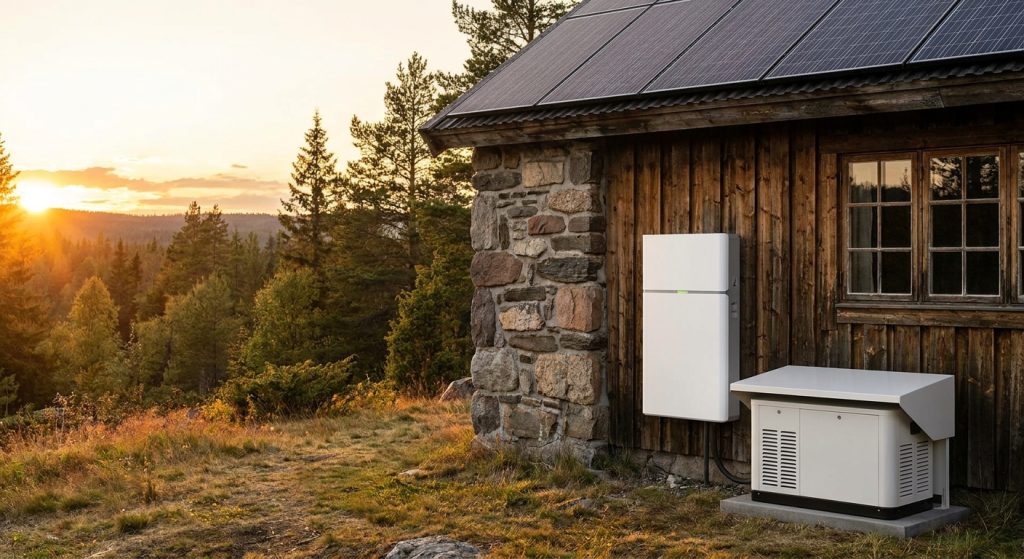
A FranklinWH battery that runs dry on day three of an outage is just a battery. The generator module is what turns a home backup system into something that can genuinely ride out extended off-grid stretches — wildfire season power shutoffs, ice storms, or full grid independence for a cabin that never sees a utility line.
This guide is for two overlapping buyers: licensed installers speccing FranklinWH systems for clients who want more than a 24-hour battery cushion, and homeowners who've already priced out a FranklinWH aPower setup and are trying to figure out whether the generator module is worth adding. If your outages regularly run past two or three days, or you're off-grid full time, this is the piece that decides whether your system actually holds up in 2026 or just looks good on a spec sheet during a one-night test.
Why this matters
Battery stacks are finite. A single aPower unit or a modest two-unit stack covers typical loads through a normal outage, but stretch that same load across five or seven days of low sun and the math stops working. The generator module gives the FranklinWH system a way to bring in fuel-based charging automatically, without a homeowner standing outside in the rain flipping a manual transfer switch at 2 a.m.
For installers, this is also a callback-reduction issue. A client who loses power on day four and has no generator failover calls the installer, not the manufacturer. Speccing the module correctly the first time avoids that conversation. FranklinWH wholesale pricing for solar installers is where most installers start once a client's load profile calls for generator backup, since the module gets ordered alongside the battery stack rather than bolted on later.
What to look for in a FranklinWH generator module for off-grid backup
Automatic transfer and start logic
The module needs to detect low state of charge and start the generator without a person in the loop. If the logic requires manual intervention, you've built a generator that only works when someone's home and awake — which defeats the point of off-grid backup in the first place.
Generator compatibility and fuel type
Propane, gasoline, and diesel generators all behave differently under load and cold-start conditions. Confirm the generator you're pairing (or already own) is rated for the amperage the module expects, and that starting logic accounts for cold-weather cranking if the install is somewhere that sees hard winters.
Battery stack size before you add fuel
A generator module compensates for insufficient storage, but it shouldn't be the primary fix for an undersized stack. If the battery bank can't carry a full evening of critical loads on its own, sizing is the first problem to solve — not the generator. How to size a solar battery system for whole-home backup walks through that math before you spend on generator hardware.
Dry contact and communication wiring
The module talks to the aGate and the battery stack through dry contacts or a direct communication link, depending on install year and firmware version. Get this wrong and the generator either never starts or never stops — both are expensive mistakes to diagnose after the drywall is closed up.
Fuel logistics, not just hardware
A generator module is only as good as the fuel behind it. A 250-gallon propane tank changes the off-grid math completely versus a five-gallon gas can. Buyers planning true off-grid use in 2026 need to size fuel storage against expected run-days, not just buy the module and assume it solves everything.
Permitting and utility interconnection rules
Generator integration with battery backup touches interconnection agreements in some jurisdictions, especially for grid-tied systems that also island. Confirm local requirements before the generator module goes live — this is a documentation step, not a hardware step, but it holds up inspections just as often.
Top picks for extending FranklinWH off-grid backup
The standard pairing most buyers land on. A FranklinWH aPower stack sized to cover a full night of critical loads, paired with the generator module and a propane or dual-fuel generator in the 8-12kW class, covers the majority of extended-outage scenarios without over-building. Best FranklinWH battery setup for whole-home backup is the reference point for sizing that stack correctly before adding the module on top. This is the pairing to spec first for anyone asking about off-grid extension in 2026 — everything else in this list is a variant of it.
The rural, no-utility-line install. For cabins or properties with no grid connection at all, the generator module isn't an add-on — it's the backbone of daily cycling, not just emergency backup. Fuel logistics matter more here than anywhere else on this list, and undersizing the generator relative to peak load (well pump start-up draw especially) is the single most common failure point reported by installers doing true off-grid work.
The critical-loads household. Homes running medical equipment that can't tolerate a gap in power need the transfer logic to be near-instant, not just eventual. Solar battery systems for homes with medical equipment needs covers the load-priority wiring that has to happen before a generator module is even relevant — get the critical circuit isolation right first.
The well-pump property. Well pumps draw a hard surge on startup that trips undersized transfer hardware more often than any other single appliance in a rural backup system. Battery backup systems for homes with well pumps breaks down the surge math that determines whether the generator module needs to carry that load directly or whether the battery stack can absorb it.
The short-outage, grid-tied home. If outages in your area rarely run past 24-36 hours and the grid comes back reliably, a generator module is often unnecessary weight on the budget. A right-sized battery stack alone, without fuel backup, covers this case more cheaply and with one less system to maintain.
What to avoid
- A generator module with no matching battery stack sizing. Buying the module before confirming the battery bank covers baseline critical loads means the generator is compensating for a design mistake, not extending a working system.
- Off-brand transfer switches retrofitted to a FranklinWH system. Compatibility isn't guaranteed, and troubleshooting a mismatched transfer switch mid-outage is the worst possible time to discover a wiring conflict.
- Undersized fuel storage for the expected run-time. A generator module with a five-gallon gas can behind it is a 90-minute solution dressed up as a multi-day one. Size fuel storage against actual expected outage length, not best-case assumptions.
Comparison across the criteria
| Configuration | Best for | Transfer logic needed | Fuel/storage priority |
|---|---|---|---|
| Standard aPower + generator module | Most residential backup buyers | Automatic, low-SOC triggered | Moderate (8-12kW dual-fuel) |
| Rural off-grid, no utility line | Cabins, full off-grid properties | Automatic, daily-cycle capable | High — largest tank size on this list |
| Critical-loads household | Medical equipment dependency | Near-instant, priority circuit | Moderate, redundancy matters more than size |
| Well-pump property | Rural homes with private wells | Automatic, surge-rated | Moderate, sized to pump startup draw |
| Short-outage, grid-tied home | Areas with reliable grid restoration | Not required | Low — battery-only often sufficient |
Batteries and inverters, including the FranklinWH generator module components ordered alongside a stack, ship free through Sun Supply PV — a detail worth factoring into total system cost before comparing configurations line by line.
FAQ
Does the FranklinWH generator module work with any generator?
No — the generator needs to match the amperage and fuel-start requirements the module expects, and compatibility should be confirmed before purchase rather than assumed. Dual-fuel generators in the 8-12kW range cover most residential pairings as of 2026.
How long can a FranklinWH system run fully off-grid with the generator module installed?
Run-time depends entirely on fuel storage and load, not battery capacity alone — a well-stocked propane tank can extend backup indefinitely, while a small gas can covers a few hours at most.
Is the generator module worth it for a home that rarely loses power for more than a day?
Usually not. Short, infrequent outages are typically covered by a correctly sized battery stack alone, and the generator module adds cost and maintenance without a matching use case.
Does a well pump need special sizing with a generator module?
Yes — well pump startup surge is one of the most common causes of transfer failures in rural installs, and sizing should account for that surge specifically, not just running wattage.
Can the generator module be added after the FranklinWH system is already installed?
In most cases yes, though wiring and dry contact configuration should be confirmed against the install's firmware version before ordering, since older installs may need an update first.
Do installers get different pricing on the generator module versus retail?
Licensed installers ordering through wholesale channels typically see different pricing structures than residential retail buyers — confirm current tiers before quoting a client.
What's the biggest mistake homeowners make with generator module sizing?
Assuming the generator compensates for an undersized battery stack. It should extend an already-correct system, not fix an incorrect one.
Does adding a generator module affect permitting?
It can, depending on jurisdiction and whether the system islands from the grid — check local requirements before commissioning, and keep documentation general rather than assuming approval.
One last thing
The detail installers miss most often isn't the module itself — it's cold-weather generator starting. A generator that cranks fine in a September test can fail to start in a January cold snap, right when the battery stack is already stressed by short winter days and heating loads. If the install is anywhere that sees hard freezes, that's the scenario worth testing before the first real outage, not after.
Related guides
