 Inverters & Batteries ship FREE
 Ask about rewards for referring friends and family
 U.S. Based Support
 Want to Add a battery?
solar inverters
Best Solar Panels for Snow Load in 2026: Ranked Picks
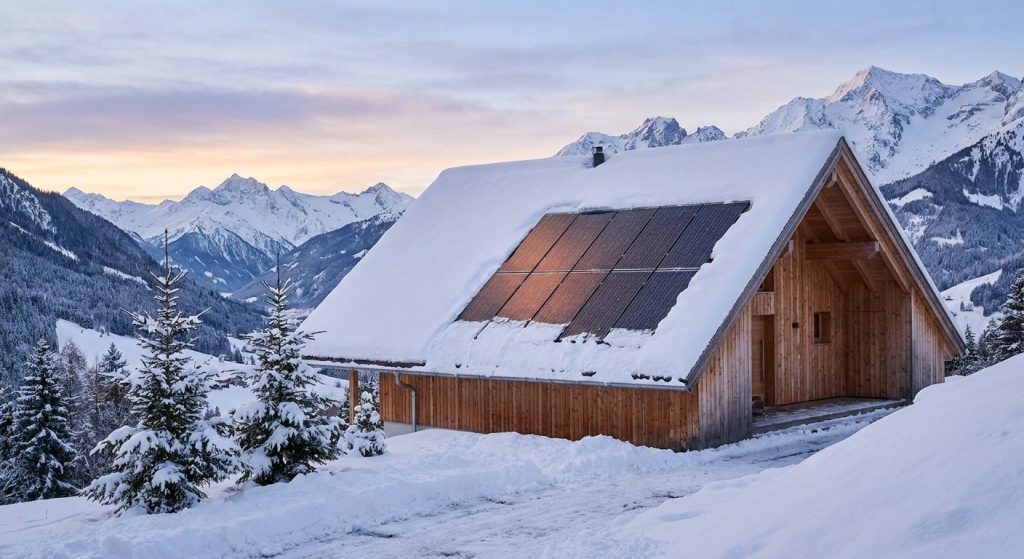
Snow load isn't a spec you check after you've picked a panel—it's the spec that picks the panel for you. In regions where roofs carry 40, 60, or even 100 pounds per square foot of snow in a bad winter, the wrong panel or the wrong racking system means cracked cells, voided warranties, or a roof that can't legally pass permit review.
The short version: REC Alpha Pure-R and Q.Cells Q.TRON both carry front-side load ratings high enough for most heavy snow climates (6000 Pa and up), but the panel rating only matters if the racking underneath is engineered for the same load. In 2026, installers working in Vermont, upstate New York, the Rockies, and the northern Midwest are pairing high-rated panels with IronRidge or Unirac racking systems stamped by a structural engineer for the specific site — not just the panel datasheet number. That combination, not panel choice alone, is what gets a permit approved and a roof through a 100-year storm.
Why this matters
A solar panel's snow load rating tells you the maximum static pressure, measured in pascals (Pa), the front glass and frame can take before deflection risk rises. Standard residential panels are rated around 5400 Pa on the front and 2400 Pa on the back — fine for most of the U.S. But 5400 Pa translates to roughly 113 pounds per square foot, and parts of the snow belt regularly exceed that in a single accumulation event, before accounting for drift loading against a roof edge or valley.
Get this wrong and the failure isn't cosmetic. Micro-cracking in cells under sustained load reduces output over years, and in the worst cases a frame failure voids the manufacturer warranty outright. That's why wind load requirements for solar racking and snow load specs have to be reviewed together — a racking system rated for 40 psf snow but installed in a 60 psf county code zone is a permit rejection waiting to happen, and in many jurisdictions it requires a structural engineer stamp for a solar permit before the inspector will even look at it.
How this list was built
Rankings below are based on published manufacturer datasheets for front-side static load ratings (measured in Pa per IEC 61215 and UL 61730 testing), frame depth, and mounting hole configuration — the three factors that most affect real-world snow performance. Panels are grouped by load rating tier, not by price, because in high-snow-load regions the rating is the gating factor before cost ever enters the conversation. Racking compatibility and clamp spacing were checked against manufacturer installation manuals current as of 2026.
The ranked list
1. REC Alpha Pure-R — the snow load heavyweight
REC's Alpha Pure-R series carries a front-side load rating up to 6000 Pa when installed with the manufacturer's specified clamp spacing, roughly 25 pounds per square foot above the industry-standard panel. The half-cut cell layout and heterojunction cell technology also mean less power loss under partial shading from drift buildup at roof edges. For installers quoting jobs in Colorado's high country or northern New England, this is the panel that clears code review without extra engineering line items. Spec this one when the site snow load exceeds 60 psf and the client wants headroom, not just compliance.
2. Q.Cells Q.TRON — the value pick for moderate-to-heavy zones
Q.Cells' Q.TRON G2 line is rated to 5400 Pa standard, with documented testing to 7000 Pa under Q.Cells' own enhanced-clamp configuration. That flexibility makes it a strong fit for installers who need one SKU to cover both standard and elevated snow zones without stocking two separate panels. Output per panel runs competitive with REC in the same wattage class. Skip the enhanced-clamp config only if the local snow load code is under 40 psf — otherwise it's worth the extra hardware line item.
3. Silfab Elite BG — the North American-manufactured option
Silfab's Elite BG series is assembled in Washington State and carries a 6000 Pa front load rating with a reinforced frame profile designed specifically for northern climates. Installers working under Buy America or domestic-content requirements for certain incentive programs will find this one checks two boxes at once — load rating and country of manufacture. A solid call for installers bidding jobs with domestic-content stipulations in the contract.
4. JA Solar JAM72S30 — the budget-conscious mid-tier
JA Solar's deep-frame design on the JAM72S30 series hits 5400 Pa front / 2400 Pa back, the industry baseline, but the frame depth (35mm vs the common 30mm) adds real-world rigidity that shows up in field performance reports even though it doesn't move the datasheet number. For jobs in the 30-45 psf snow load range, this is the panel installers reach for when margin matters more than headroom. Fine for moderate snow zones; don't stretch it past 50 psf on the county snow map.
5. LONGi Hi-MO 6 — the reliable mid-tier choice
LONGi's Hi-MO 6 series sits at the same 5400 Pa front rating as JA Solar but pairs it with a slightly higher efficiency rating per panel, useful on roofs where snow load isn't the only constraint — space is too. A reasonable middle-ground pick when the roof is small and every watt per panel counts.
6. Trina Solar Vertex — the high-wattage option for large arrays
Trina's Vertex series delivers higher per-panel wattage in a larger format, rated to 5400 Pa front load. On big ground-mount or commercial arrays where fewer, larger panels reduce racking hardware and labor cost, Vertex is the panel installers spec — provided the racking underneath is engineered for both the panel dimensions and the site's snow load. Good for large-format arrays; verify racking span tables before ordering, since larger panels need tighter rail spacing under heavy snow.
Comparison table
| Panel | Front Load Rating | Frame Depth | Best Fit |
|---|---|---|---|
| REC Alpha Pure-R | Up to 6000 Pa | Standard | Highest snow load zones (60+ psf) |
| Q.Cells Q.TRON G2 | 5400–7000 Pa | Standard | Moderate to heavy zones, one-SKU flexibility |
| Silfab Elite BG | 6000 Pa | Reinforced | Domestic-content requirements |
| JA Solar JAM72S30 | 5400 Pa | 35mm deep | Moderate zones, budget-conscious jobs |
| LONGi Hi-MO 6 | 5400 Pa | Standard | Small roofs, space-constrained arrays |
| Trina Solar Vertex | 5400 Pa | Standard | Large-format ground-mount/commercial |
The panel rating is only half the equation. Racking has to match. IronRidge and Unirac both publish span tables tied to specific snow load zones, and ground-mount racking systems in particular need tighter post spacing as design snow load climbs — a system that's code-compliant at 30 psf often needs an entirely different post schedule at 60 psf. On steep-slope metal roofs, metal roof mounting systems using S-5! clamps distribute load across more structural members than lag-bolted rail systems, which matters when drift loading concentrates near ridgelines.
Where to buy
- Confirm the panel's published load rating against the county or state snow load map before ordering — don't rely on a general climate assumption.
- Order racking and panels together from the same distribution channel so clamp spacing and span tables match what's on the datasheet, not a generic install guide.
- Licensed installers sourcing in volume should check current wholesale solar panels for residential installers pricing tiers rather than per-unit retail, since snow-rated panels often carry a premium that volume pricing offsets. Inverters and batteries ship free regardless of order size, so factor that into total landed cost when comparing quotes.
FAQ
What's the best solar panel for snow load in 2026?
REC Alpha Pure-R and Silfab Elite BG both carry front-side load ratings up to 6000 Pa, the highest commonly available on standard residential panels as of 2026, making them the top picks for snow load zones above 60 psf.
Is a higher snow load rating always better?
Not if the site doesn't need it. A 6000 Pa panel costs more than a 5400 Pa panel with no performance benefit in a 30 psf snow zone — match the rating to the local building code, not the highest number available.
Does racking matter more than the panel rating?
Racking span and clamp spacing determine whether the panel's rated load actually transfers to the roof structure safely. A high-rated panel on undersized racking still fails inspection.
How much snow load can a typical roof handle before solar panels become a structural question?
Most residential roofs are designed for 20-40 psf ground snow load per local code, but drift and roof geometry can push actual loading higher at valleys and parapets — that's when a structural engineer stamp becomes necessary for permit approval.
Do snow-rated panels cost significantly more than standard panels?
Pricing varies by distributor and volume tier; contact Sun Supply PV directly for current wholesale pricing rather than assuming a fixed premium.
Can existing racking be retrofitted for a higher snow load rating?
Sometimes, by adding intermediate clamps or reducing panel span, but it depends on the specific racking system's engineering documentation — check the manufacturer's span tables before assuming a retrofit is possible.
Are ground-mount systems better than roof-mount for high snow load sites?
Ground-mount systems allow more flexibility in post spacing and tilt angle to shed snow faster, which is why many installers in heavy snow regions default to ground-mount when the site allows it.
What panel frame depth is considered snow-load resistant?
Frames in the 35-40mm range generally show better real-world rigidity under sustained load than the common 30mm frame, even when the datasheet load rating is identical.
One last thing
Most installers focus entirely on the panel's Pa rating and forget that tilt angle changes snow retention more than any spec sheet number. A panel mounted at 35-40 degrees sheds snow within days in most climates; the same panel at a 10-degree low-slope tilt can hold snow load for weeks, effectively derating the whole system regardless of what the datasheet says. If the site allows tilt adjustment, that's often a cheaper fix than upgrading to a higher-rated panel.
Related guides
