 Inverters & Batteries ship FREE
 Ask about rewards for referring friends and family
 U.S. Based Support
 Want to Add a battery?
solar inverters
Best Solar Panel Racking Systems Residential 2026: Ranked
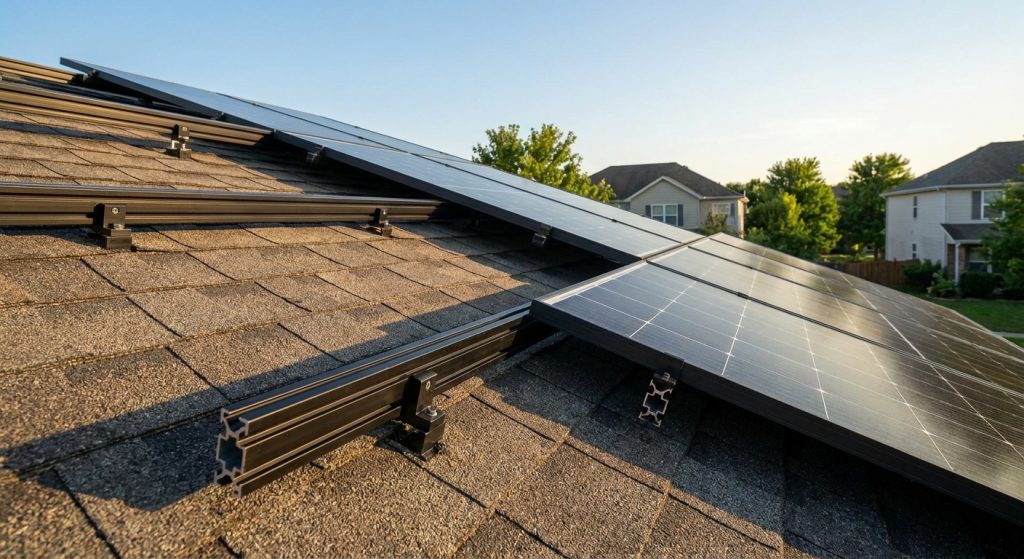
Picking the wrong racking system doesn't just cost you a callback – it can void a warranty, fail an inspection, or leave a roof leaking two years after the crew packs up. This guide ranks the racking systems installers and homeowners actually spec for residential rooftops in 2026, broken down by roof type, attachment method, and the wind and snow load numbers that matter when a permit reviewer starts asking questions.
Why racking choice matters more than panel choice
Most homeowners obsess over panel efficiency and ignore the rail, clamp, or flashing holding those panels to the roof. That's backward. A tier-1 panel bolted to an undersized rail system in a 110-mph wind zone is a liability, not an asset. Racking is the structural layer of a solar install, and it's the layer that gets inspected against code – specifically wind load requirements for solar racking tied to your local exposure category and roof pitch.
The roof type dictates almost everything downstream: asphalt shingle wants a different attachment than standing seam metal, and a ballasted flat roof doesn't need penetrations at all. Get the roof-to-racking match wrong in 2026 and you're either over-engineering a simple job or under-engineering a risky one.
How this list was built
This ranking weighs four factors: attachment method (penetrating vs. non-penetrating), published wind and snow load ratings, compatibility with common residential roof types (shingle, tile, metal, low-slope membrane), and how widely each system shows up in current installer inventories. Manufacturer engineering letters and PE-stamped documentation – the paperwork your permitting office actually wants – carry more weight here than marketing claims. Systems that require proprietary tools or non-standard hardware got flagged, since that raises long-term serviceability risk for homeowners years down the line.
The ranked list
1. IronRidge XR100 Rail System
The flush-mount standard most installers default to for asphalt shingle roofs. The XR100 rail spans up to 74 inches between roof attachment points, which cuts down the number of penetrations per array compared to shorter-span rails. Paired with IronRidge's FlashFoot2 flashing, it's engineered to meet current wind and snow load provisions under standard residential code cycles. The default pick for a straightforward asphalt shingle job in 2026 – it's rarely the wrong answer, even if it's not the most interesting one.
2. Unirac SOLARMOUNT
Unirac has been in the rail-mount business since the 1990s, and SOLARMOUNT is the system with the longest field track record of anything on this list. It uses a modular L-foot attachment compatible with composition shingle and low-slope membrane roofs, and the rail profile is designed to accept a wide range of clamp and grounding hardware without special-order parts. The safe long-term bet when parts availability years from now matters more than shaving install time today.
3. Pegasus Solar Rail-less System
Pegasus Solar's rail-less racking attaches panels directly to roof-mounted hooks instead of running continuous rails across the array, which cuts total rack weight and speeds install time on steep or brittle roofs. It's a strong fit for tile roof mounting, where every extra roof penetration and pound of dead load adds risk. The right call on tile and other roofs where you want the smallest footprint possible – just confirm hook spacing matches your rafter layout before ordering.
4. S-5! Metal Roof Clamps
For standing seam metal roofs, S-5! clamps grip the seam mechanically with zero roof penetrations – no screws, no flashing, no sealant to fail a decade later. S-5!'s own engineering data lists pull-off strength in the hundreds of pounds per clamp depending on seam profile, which is why these clamps show up on nearly every metal-roof residential job in 2026. The obvious choice the moment a metal roof is involved – there isn't a strong second option worth considering.
5. Ground Mount Racking (IronRidge / Unirac Ground Systems)
Not every residential job belongs on the roof. Homes with steep pitches, heavy shading, or roofs too old to justify new penetrations are candidates for ground mount racking systems on driven piers or helical piles instead. It costs more per watt than a rooftop kit, but it sidesteps roof-age and shading arguments entirely. Worth pricing out whenever the roof itself is the limiting factor, not the array size.
Comparison table
| System | Best Roof Type | Attachment Method | Standout Spec |
|---|---|---|---|
| IronRidge XR100 | Asphalt shingle | Flashed rail, L-foot | 74-inch max rail span |
| Unirac SOLARMOUNT | Shingle, low-slope membrane | Rail with L-foot | Widest hardware compatibility |
| Pegasus Solar Rail-less | Tile, lightweight roofs | Direct panel-to-hook | Reduced dead load vs. rail systems |
| S-5! Clamps | Standing seam metal | Non-penetrating clamp | Hundreds of lbf pull-off per clamp |
| Ground Mount Kits | Poor roof candidates | Pier or helical pile | No roof penetration at all |
What to avoid
- Mixing brands mid-array. Running IronRidge rail with a competing clamp system to save a few dollars voids the engineering letter that ties the whole assembly's wind rating together.
- Skipping the wind load math because "it's just a small roof." Smaller arrays still need to meet the same code minimums, and inspectors don't grade on square footage.
- Assuming rail-less racking is always lighter overall. It reduces rail weight, but hook count and roof attachment density can offset that on steep or complex roof planes – check the layout before assuming it's the lighter system.
Where to buy
- Order racking as a complete kit – rails, flashing, clamps, and grounding lugs from the same manufacturer – so the PE-stamped engineering letter covers the full assembly, not just the rail.
- Confirm your wind and snow zone against the manufacturer's documented ratings before the order goes in, not after the permit gets kicked back.
- Buy through a distributor stocking wholesale solar panels for residential installers alongside racking, so panel weight and rail spec get matched at order time rather than reconciled on the roof. Availability on specific SKUs varies – check current stock before locking in an install date.
FAQ
What's the best solar panel racking system for a residential roof?
For a standard asphalt shingle roof, IronRidge XR100 is the most common 2026 choice because of its long rail span and flashed attachment. Tile and metal roofs need different systems entirely – Pegasus Solar for tile, S-5! clamps for standing seam metal.
Is rail-less racking better than rail-based racking?
Rail-less systems like Pegasus Solar cut dead load and speed installs on tile and lightweight roofs, but rail-based systems like IronRidge or Unirac offer more hardware flexibility for irregular arrays. Neither is universally better – it depends on roof type and layout.
Do metal roofs need penetrating racking?
No. S-5! clamps attach to standing seam metal without any roof penetration, gripping the seam mechanically instead. This is the standard approach for metal roofs in 2026 and avoids the leak risk that comes with drilled attachment points.
How much wind load should residential racking be rated for?
It depends on your exposure category and local code cycle, not a single national number. A structural engineer stamp confirms the racking system meets your specific site's requirements before the permit is approved.
Does racking need a structural engineer stamp?
Most jurisdictions require one for rooftop solar in 2026, especially for anything beyond a small standard array. Check how to get a structural engineer stamp for a solar permit before submitting for approval.
Can I use ground mount racking instead of roof racking?
Yes, and it's a common workaround when a roof is too shaded, too old, or too steep to justify new penetrations. Ground mount racking costs more per watt but removes roof-age arguments from the equation entirely.
How long does racking hardware last?
Manufacturers typically publish multi-decade material warranties on aluminum rail and stainless hardware, though actual service life depends on coastal exposure and maintenance. Check the specific manufacturer's published warranty terms rather than assuming a blanket number across brands.
Is it cheaper to mix racking brands to save money?
It can look cheaper upfront, but mixing brands mid-array risks voiding the engineering documentation that ties the assembly's certified wind and snow ratings together. Full single-brand kits keep the permitting paperwork clean.
One last thing
The detail most homeowners miss: racking material choice affects roof life as much as roof type affects racking choice. Aluminum rail systems paired with stainless steel hardware resist galvanic corrosion far better than mixed-metal setups, and that's the difference between a rack that's still solid at year 20 and one that's showing rust streaks by year 8. Ask what fastener material ships with any racking kit before it's on the truck – it's a five-second question that saves a much longer conversation later.
