 Inverters & Batteries ship FREE
 Ask about rewards for referring friends and family
 U.S. Based Support
 Want to Add a battery?
solar inverters
Best Rapid Shutdown Transmitters for Solar 2026
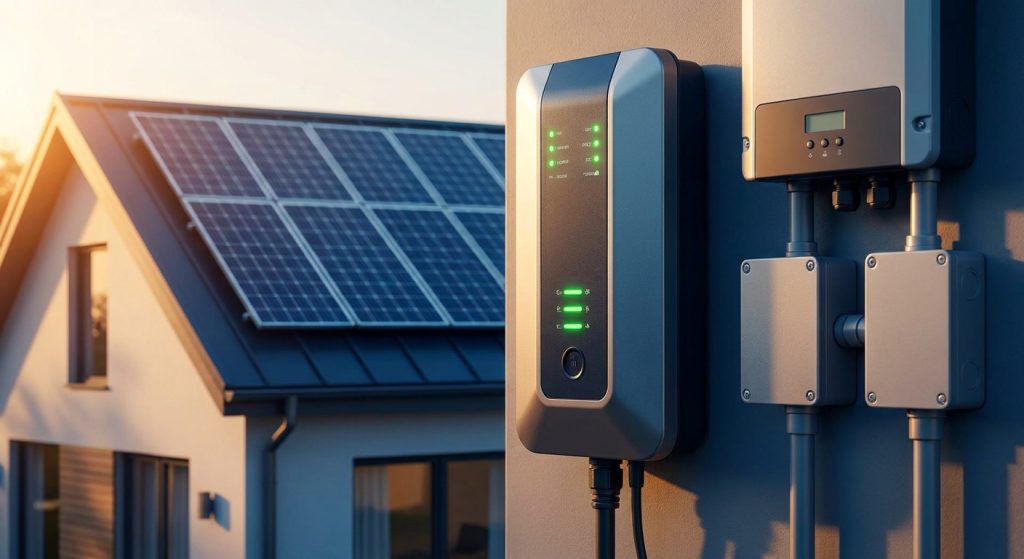
Every grid-tied residential solar array installed under NEC 690.12 needs a way to drop DC voltage at the module within seconds of a first responder hitting the array disconnect — that's the job of a rapid shutdown transmitter, and the wrong pick turns a routine inspection into a re-work order.
Why this matters
NEC 690.12 has required module-level rapid shutdown since the 2017 code cycle, and most jurisdictions running the 2020 or later cycle enforce the tighter numbers: conductors outside the array boundary have to drop to 30V within 30 seconds of initiation, and conductors inside the boundary have to drop to 80V in that same window. Inspectors check this at final. If the transmitter and the receivers on each module aren't from a matched, tested pairing, the system either fails commissioning outright or throws communication faults that installers spend hours chasing.
The confusion in 2026 is that "rapid shutdown transmitter" means different things depending on the system architecture. Module-level power electronics — SolarEdge power optimizers and Enphase microinverters — build the shutdown function into the device itself, so the string inverter or combiner acts as the transmitter with no add-on box. Traditional string-inverter installs without module-level electronics need a separate transmitter-and-receiver kit layered on top. Getting this distinction wrong at the design stage is the single most common reason residential RSD systems fail inspection.
How this list was ranked
The ranking below weighs four things: how complete the transmitter-receiver ecosystem is out of the box, documented field reliability across install volume, commissioning time (self-test versus manual verification), and whether the kit fits a retrofit onto an existing string-inverter array versus only new installs. Pricing and shipping terms reflect distributor terms in 2026 and are subject to change — check current availability before quoting a job.
The ranked list
1. SolarEdge Home Wave Inverter paired with SolarEdge Power Optimizers
The optimizer is the receiver and the inverter is the transmitter — no third box, no extra wiring run. SolarEdge has shipped tens of millions of optimizers since the platform launched, and the shutdown signal rides the existing DC home-run, so there's no separate communication line to fail. Commissioning uses the SetApp pairing sequence, which flags a missing or miswired optimizer before the inspector ever shows up. This is the default pick for any residential job already speccing SolarEdge optimizers for shade mitigation — the RSD compliance comes free with the module-level monitoring you're already buying. Inverters ship free through Sun Supply PV, which matters on jobs where the optimizer count runs into the twenties.
2. Enphase IQ8 Series Microinverters with IQ Combiner
Each IQ8 microinverter is its own AC-output device, meaning there's no DC home-run to shut down in the first place — the module goes to near-zero output the instant grid or combiner power drops, satisfying 690.12 without a discrete transmitter component at all. Enphase has been shipping microinverters with inherent rapid shutdown since before the 2017 code cycle even required it, so the compliance history is long. The tradeoff is per-module cost versus a string-inverter-plus-optimizer setup, and troubleshooting a single bad unit means climbing the roof rather than swapping an inverter-side board. Solid pick where per-module AC output and no-single-point-of-failure DC wiring matter more than lowest per-watt system cost — see the full spec breakdown on Enphase microinverters.
3. APsystems QT2 Microinverters with ECU-R Communication Gateway
APsystems runs a dual-module microinverter architecture, meaning one QT2 unit handles two panels, which cuts device count roughly in half versus a one-to-one microinverter layout. The ECU-R gateway handles monitoring and the rapid shutdown signal path together, and APsystems publishes UL 1741 and NEC 690.12 compliance documentation for the whole stack. Field reports through 2026 point to solid performance on shaded or complex roof geometries where module-level microinverters already made sense for output reasons. Worth speccing on cost-sensitive jobs where two-panel-per-device pricing beats one-to-one microinverters, though installers should confirm ECU-R firmware version matches the QT2 generation before ordering — mismatched firmware is the most common APsystems commissioning delay.
4. String Inverter Plus Add-On RSD Transmitter Kit
For arrays already committed to a traditional string inverter with no optimizers — common on simple south-facing roofs with no shading — a standalone add-on transmitter kit satisfies 690.12 without touching the inverter choice. The transmitter mounts at the combiner or array boundary and talks to a receiver clipped behind each module. This route costs less per watt than swapping to a full optimizer or microinverter system, but it adds a communication layer that has to be tested separately from the inverter's own diagnostics, and receiver placement behind the module matters more than most installers expect — a receiver buried too deep in a tight-rack gap will drop signal intermittently. Reasonable route for retrofit jobs on existing string-inverter arrays, but budget extra commissioning time for the RF or powerline handshake test.
5. Sol-Ark Hybrid Inverter with Compatible Rapid Shutdown Kit
Hybrid inverters that pair solar with battery backup — Sol-Ark's lineup among them — need the rapid shutdown conversation handled at design time because the battery's backup circuits complicate where the array boundary actually starts and stops. A hybrid inverter platform compatible with a certified RSD kit keeps the compliance question separate from the backup-power question, so an inspector isn't left guessing which conductors the shutdown covers during an outage. This matters more on 2026 jobs pairing solar with whole-home backup, covered in more detail on solar inverters for whole-home backup during grid outages. Confirm the specific inverter firmware and RSD kit generation are certified together before quoting — mixing untested combinations is the fastest way to fail a battery-backup inspection.
Comparison at a glance
| Pick | Shutdown Architecture | Extra Hardware Needed | Best Fit |
|---|---|---|---|
| SolarEdge Home Wave + Optimizers | Optimizer-integrated | None — inverter is the transmitter | New installs already using optimizers for shade |
| Enphase IQ8 + IQ Combiner | Microinverter-inherent | None | Jobs prioritizing AC-output, no DC home-run |
| APsystems QT2 + ECU-R | Dual-module microinverter | ECU-R gateway | Cost-sensitive, complex roof geometry |
| String Inverter + Add-On Kit | Discrete transmitter/receiver | Transmitter + per-module receivers | Retrofits on existing string-inverter arrays |
| Sol-Ark Hybrid + RSD Kit | Certified hybrid-compatible | Certified kit matched to inverter firmware | Solar-plus-battery backup installs |
Where to buy
- Order the transmitter and receivers as a matched kit from one distributor rather than mixing generations bought separately — firmware mismatches are the top cause of failed pairing at commissioning in 2026.
- Confirm the inverter model number against the transmitter's published compatibility list before the order ships; a one-generation gap between inverter firmware and RSD hardware is enough to break the handshake.
- On battery-backup jobs, verify the RSD kit is certified with the specific hybrid inverter model, not just the inverter brand — Sun Supply PV lists compatibility by exact model number, not brand family, to avoid this exact mistake.
Frequently asked questions
What does a rapid shutdown transmitter actually do? It sends the signal that drops array voltage to code-required levels — 30V outside the array boundary, 80V inside it — within 30 seconds of initiation, satisfying NEC 690.12 for firefighter safety.
Is a rapid shutdown transmitter required by code in 2026? Yes, in any jurisdiction enforcing the 2017 NEC or later, which covers most of the U.S. residential market as of 2026. Check the adopted code cycle with the local AHJ before designing the system.
Do microinverter systems need a separate rapid shutdown transmitter? No. Enphase and APsystems microinverters build shutdown compliance into the device itself, so there's no discrete transmitter box to buy or wire.
Can you mix SolarEdge optimizers with a different brand's inverter? No — SolarEdge optimizers are only certified and commissioned with SolarEdge inverters through the SetApp pairing process; mixing brands breaks both the shutdown compliance and the warranty.
How much does a rapid shutdown transmitter cost? Pricing depends heavily on whether it's bundled into an optimizer or microinverter (no separate line item) or sold as a standalone add-on kit for a string-inverter retrofit — contact a distributor for current 2026 pricing on the specific configuration.
What's the difference between rapid shutdown and a standard AC disconnect? An AC disconnect only cuts power on the grid side; rapid shutdown specifically targets DC conductors at the module level so a roof full of energized panels doesn't stay live during a fire response.
Do battery backup systems need rapid shutdown too? The battery itself typically isn't in scope, but any solar conductors feeding a hybrid inverter still need to meet 690.12 — confirm the RSD kit is certified for the hybrid configuration, not just the standalone solar array.
How fast does a rapid shutdown system have to de-energize the array? Within 30 seconds of initiation under the 2020 NEC cycle, which is the version most 2026 jurisdictions are enforcing.
One last thing
Installers who've fought a failed rapid shutdown inspection almost never blame the transmitter brand — they blame receiver placement. A receiver mounted flush behind a module in a tight racking gap drops signal more often than one with even a half-inch of clearance, regardless of whether it's SolarEdge, Enphase, or APsystems hardware. Spec the racking gap before the RSD kit ships, not after.
Related guides
